Ha Long Bay floating villages
The villages' families were moved ashore in 2014. You can still row around Cửa Vạn and Vung Viêng, but the Cửa Vạn cultural centre has been closed since 25 April 2024.
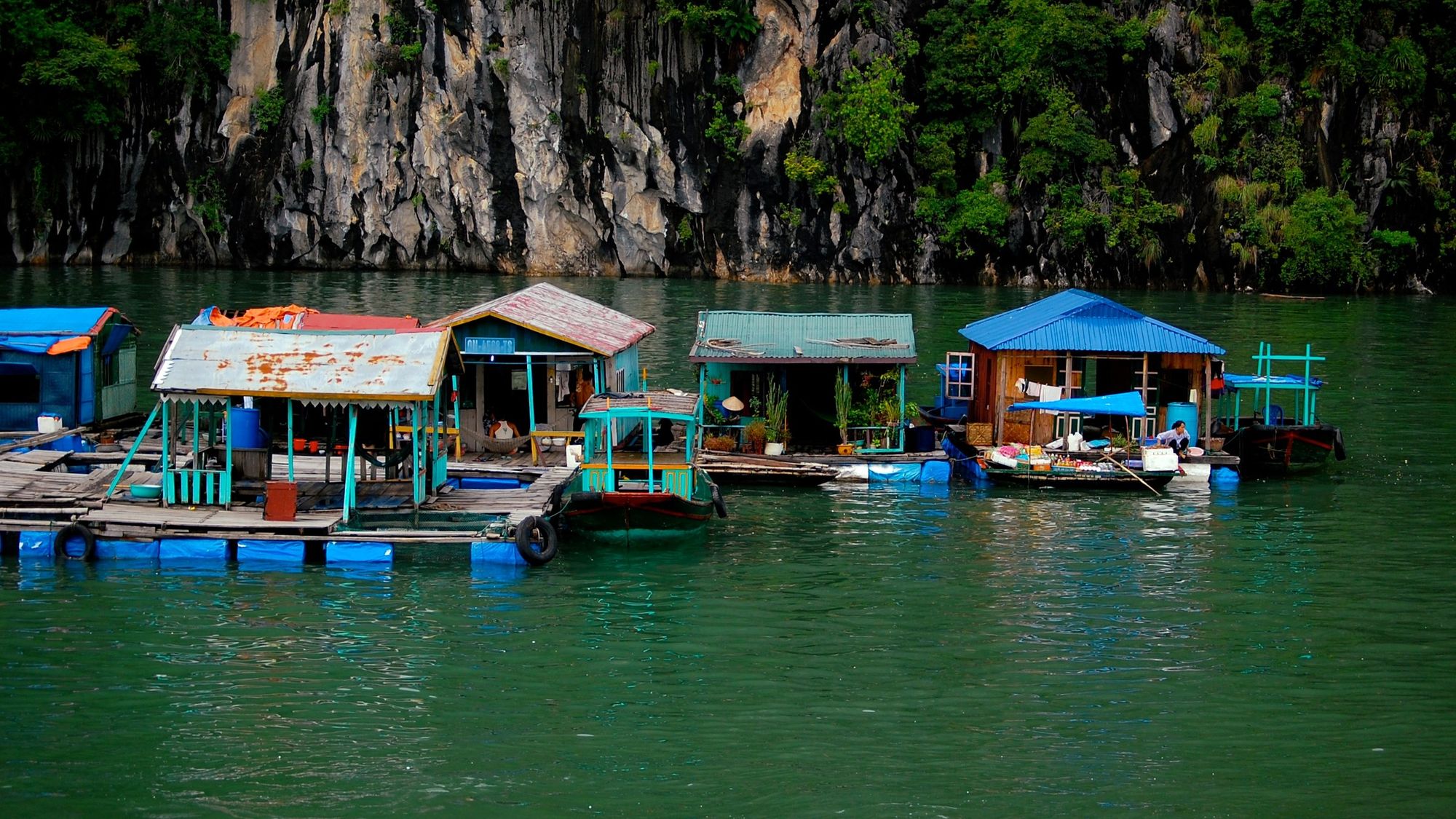
What happened to the floating villages?
In 2014 the province moved the bay’s floating-village households ashore, to a resettlement area in Hà Phong ward that is now part of Hà Tu ward. The bay’s management board, the Ha Long Bay - Yen Tu World Heritage Management Board, counts 354 households, nearly 2,000 people, from seven villages. What visitors see today are raft houses kept by the Board, fish-farm rafts, and rowing and kayak services staffed largely by former residents or their children.
| Place or service | Status | Since | Source |
|---|---|---|---|
| Cửa Vạn village (route 3) | Seen from a woven bamboo boat or kayak; no resident community, and guests are not taken aboard the raft houses | Residents moved ashore in 2014 | Báo Quảng Ninh, 12 April 2026 |
| Cửa Vạn Floating Cultural Centre | Closed to visits, badly damaged by Typhoon Yagi, no reopening date | 25 April 2024 | Báo Quảng Ninh, 11 April 2024 and 12 April 2026 |
| Hát giao duyên singing at Cửa Vạn | Performances restarted | March 2026 | Board, 27 February 2026 |
| Floating classroom raft at Cửa Vạn | Collapsed and dismantled | 27 and 28 September 2023 | Báo Quảng Ninh, 28 September 2023 |
| Vung Viêng village (route 4) | Rowing tours running; motor boats may not approach | Running in 2026 | Board, 30 July 2026; Nhân Dân, 11 December 2024 |
| Vung Viêng pearl farm | Wrecked by Typhoon Yagi; rebuilding not confirmed | September 2024 | Báo Quảng Ninh, 13 September 2024 |
| Ba Hang rowing and kayak point (routes 1 and 5) | Destroyed by Typhoon Yagi, then visitors returned | Back by 21 September 2024 | Tuổi Trẻ, 13 September 2024; Thanh Niên, 21 September 2024 |
| Overnight stays with a fishing family | No official homestay found | Checked October 2026 | Nhân Dân, 11 December 2024 |
The move was a long time coming. In June 2013 Hùng Thắng ward had about 5,000 people living on land and over 2,000 at sea, in three areas: Cửa Vạn, Vung Viêng with Cặp Dè, and Ba Hang. The province had pressed the city to act from September 2012, and that December it approved 167 billion VND for 364 new houses on almost 8 ha at Hà Phong. The rafts were to be cleared by 15 February 2014, late enough for families to harvest their farmed fish, and households moved into the new village during that year.
Families whose raft had been moored in one place before 21 March 2008 and who owned no home ashore received an 80 m² plot with a house. The resettlement area covers 7.7 ha and 364 homes, organised as Khu phố 8 with six residents’ groups. The reasons given were clean water and scenery, protection of the World Heritage property, safety in storms, and access to schools and services. IUCN noted in 2022 that the nomination dossier gave reducing environmental impact as the reason, and that roughly 10% of the former villagers work in tourism, rowing small boats and showing their traditional culture.
Life ashore was not easy for everyone. By 2019 many resettled families were struggling, some had sold their plots and gone back to sea, and the head of Khu phố 8 said more than a dozen groups of fishing families still lived afloat. Small groups of families who did not qualify for housing still live on boats in the bay and near the shore. They are not a visitor attraction.
The Board took over 69 raft houses from the departing families in 2014 and placed them at Cửa Vạn and Vung Viêng for visitors to see. By October 2023 about half had been damaged, sunk or disposed of. Fishing has been banned in the strictly protected heritage zone since 2018, and fish farming is zoned outside it.
The photographs below were all taken between 2003 and 2012, before the move ashore. Only one names its village: at Hoa Cương the name is painted on the sign of the nearest house. Open any of them to see it at full size with its caption and credit.
-
Làng chài Hoa Cương Floating houses and netted fish pens on blue barrels sit below a forested limestone ridge in Hạ Long Bay, with a blue sign reading Làng chài Hoa Cương on the nearest house.
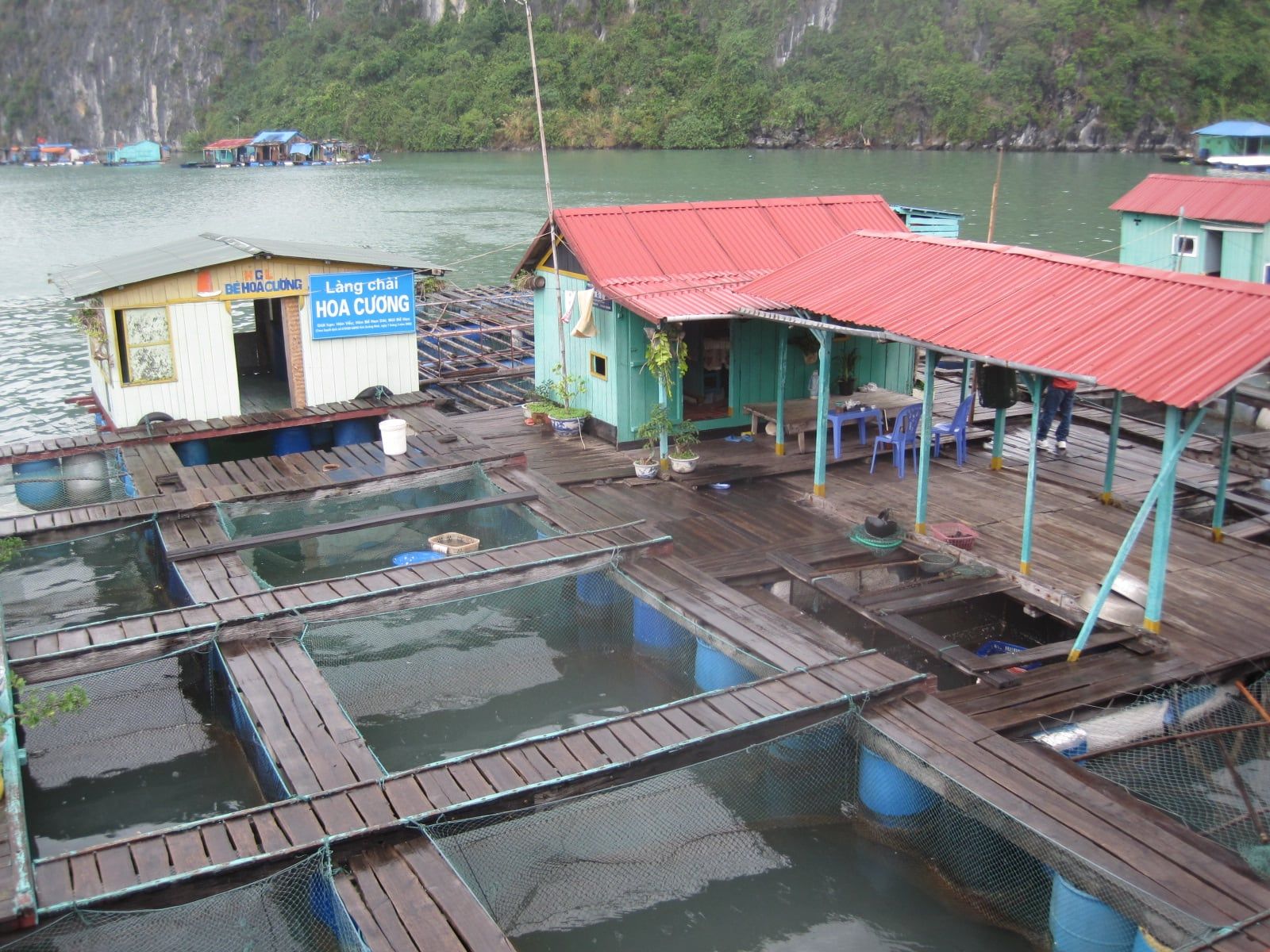
Làng chài Hoa Cương Floating houses and netted fish pens on blue barrels sit below a forested limestone ridge in Hạ Long Bay, with a blue sign reading Làng chài Hoa Cương on the nearest house. Photo: Arnaud 25, CC BY-SA 4.0 -
Vịnh Hạ Long Floating houses with teal walls, wooden boats and a red flag fill a sheltered cove below hazy limestone hills in Hạ Long Bay in 2003.
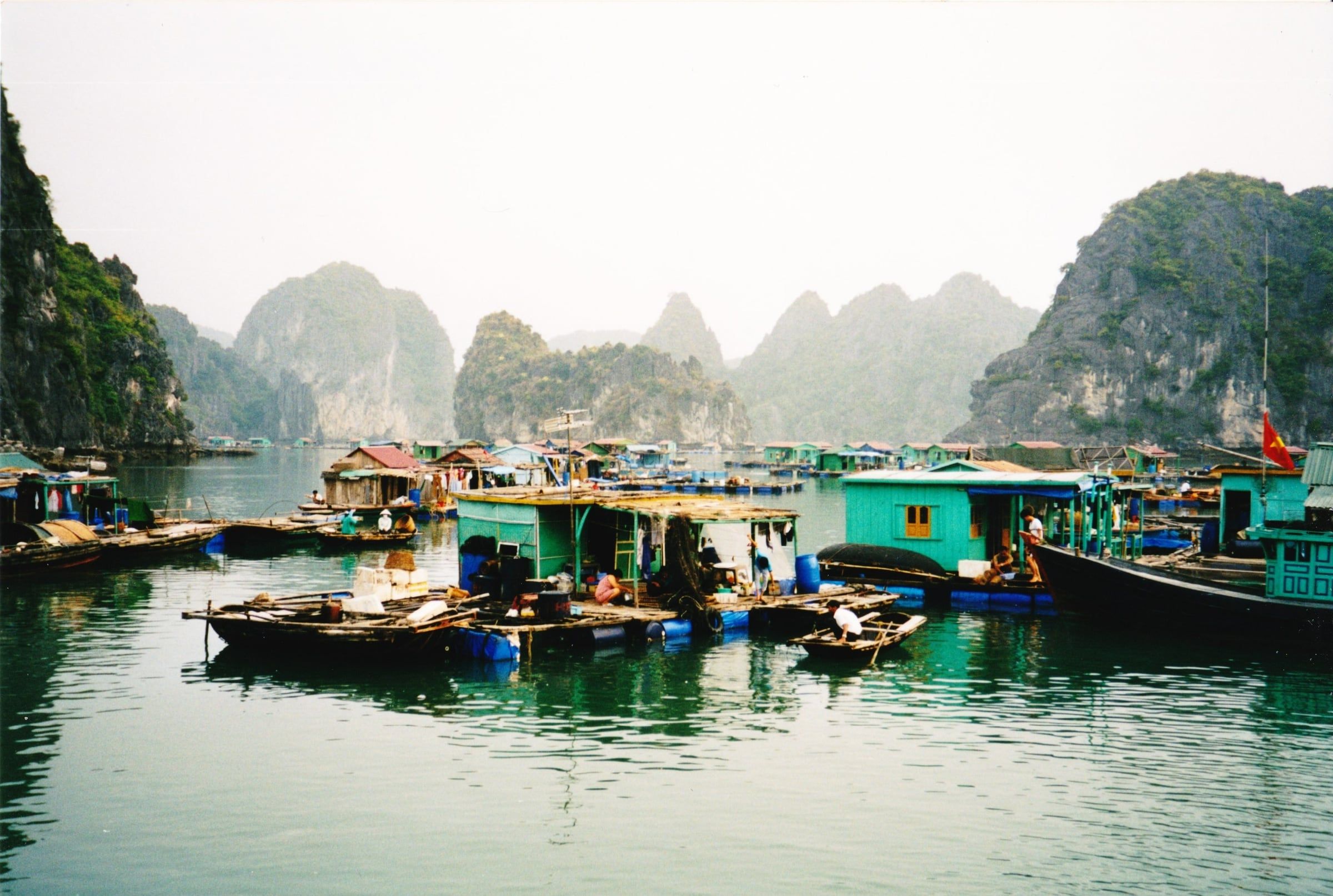
Vịnh Hạ Long Floating houses with teal walls, wooden boats and a red flag fill a sheltered cove below hazy limestone hills in Hạ Long Bay in 2003. Photo: Benoît Prieur, CC0 -
Vịnh Hạ Long A floating house with blue tarpaulin walls and a weathered tin roof stands among yellow wooden boats below hazy limestone cliffs in Hạ Long Bay in 2003.
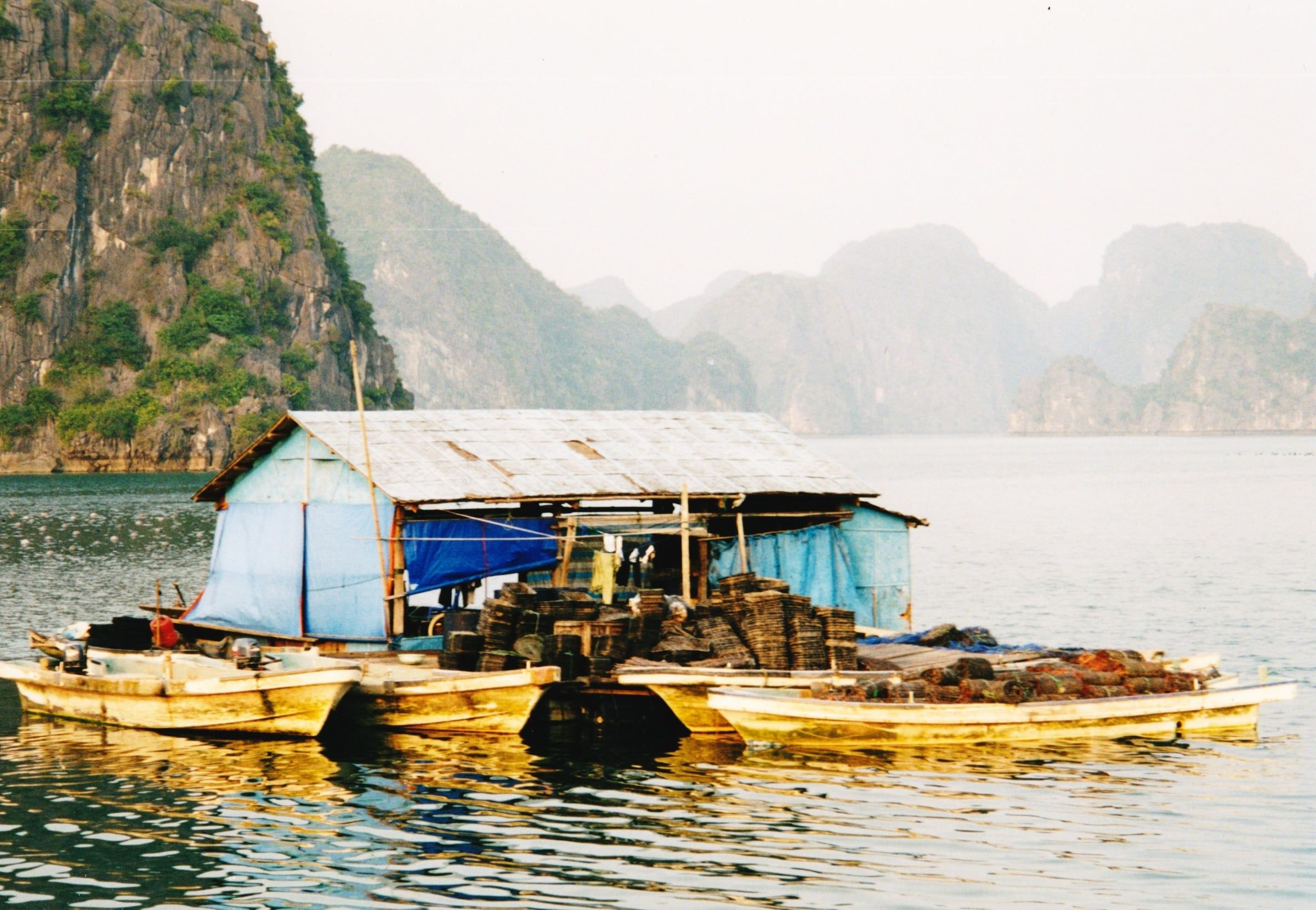
Vịnh Hạ Long A floating house with blue tarpaulin walls and a weathered tin roof stands among yellow wooden boats below hazy limestone cliffs in Hạ Long Bay in 2003. Photo: Benoît Prieur, CC0 -
Vịnh Hạ Long A floating home with a green tin roof, clothes on a rack and a hammock stands on a pontoon beside two red boats, with a Vietnamese flag flying above, below a wooded cliff in Hạ Long Bay.
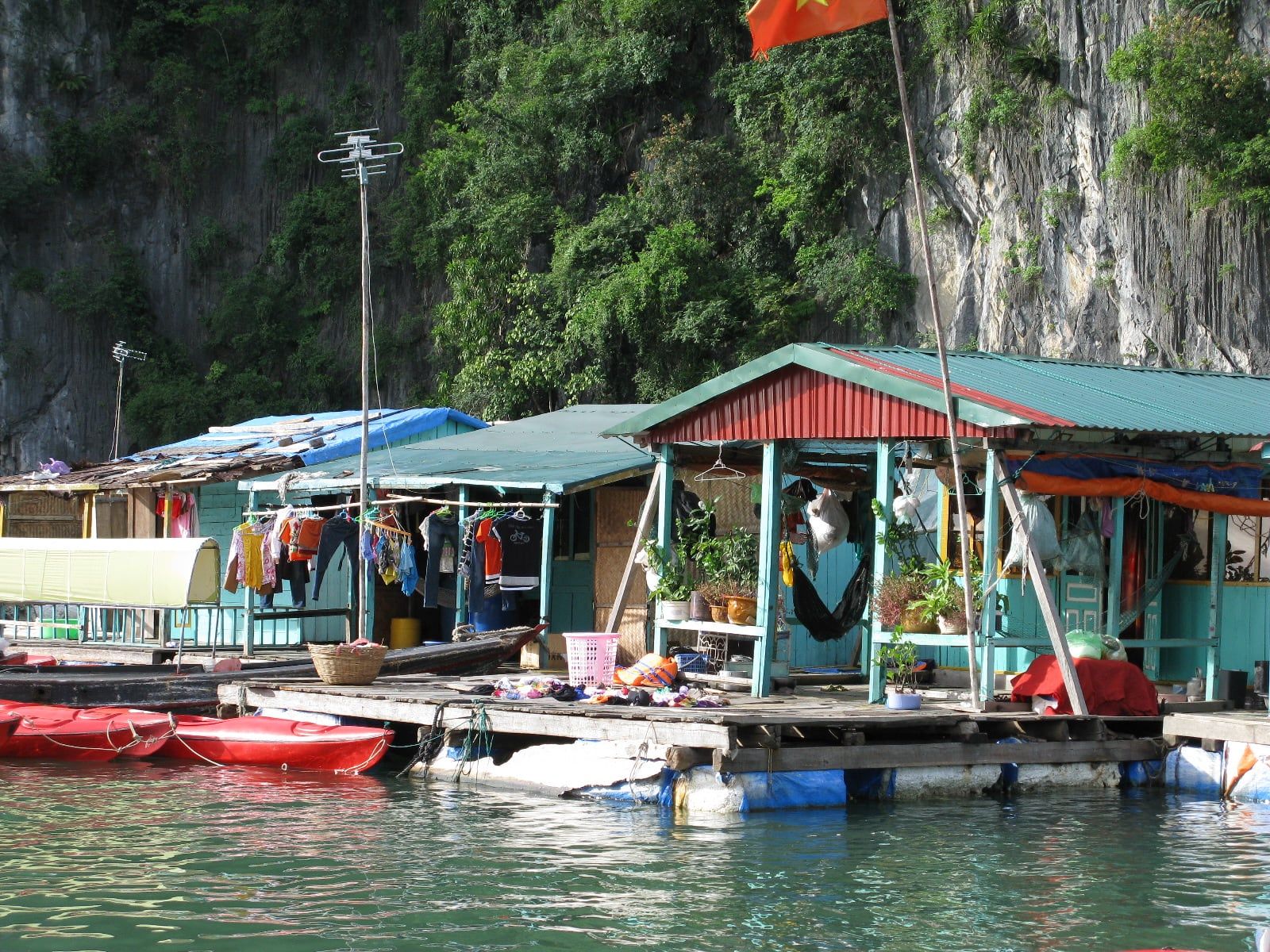
Vịnh Hạ Long A floating home with a green tin roof, clothes on a rack and a hammock stands on a pontoon beside two red boats, with a Vietnamese flag flying above, below a wooded cliff in Hạ Long Bay. Photo: Caitriana Nicholson from Beijing, China, CC BY-SA 2.0 -
Vịnh Hạ Long Floating houses with red and blue roofs stand on a long blue pontoon below a steep forested limestone hill, with a small covered boat passing at left in Hạ Long Bay.
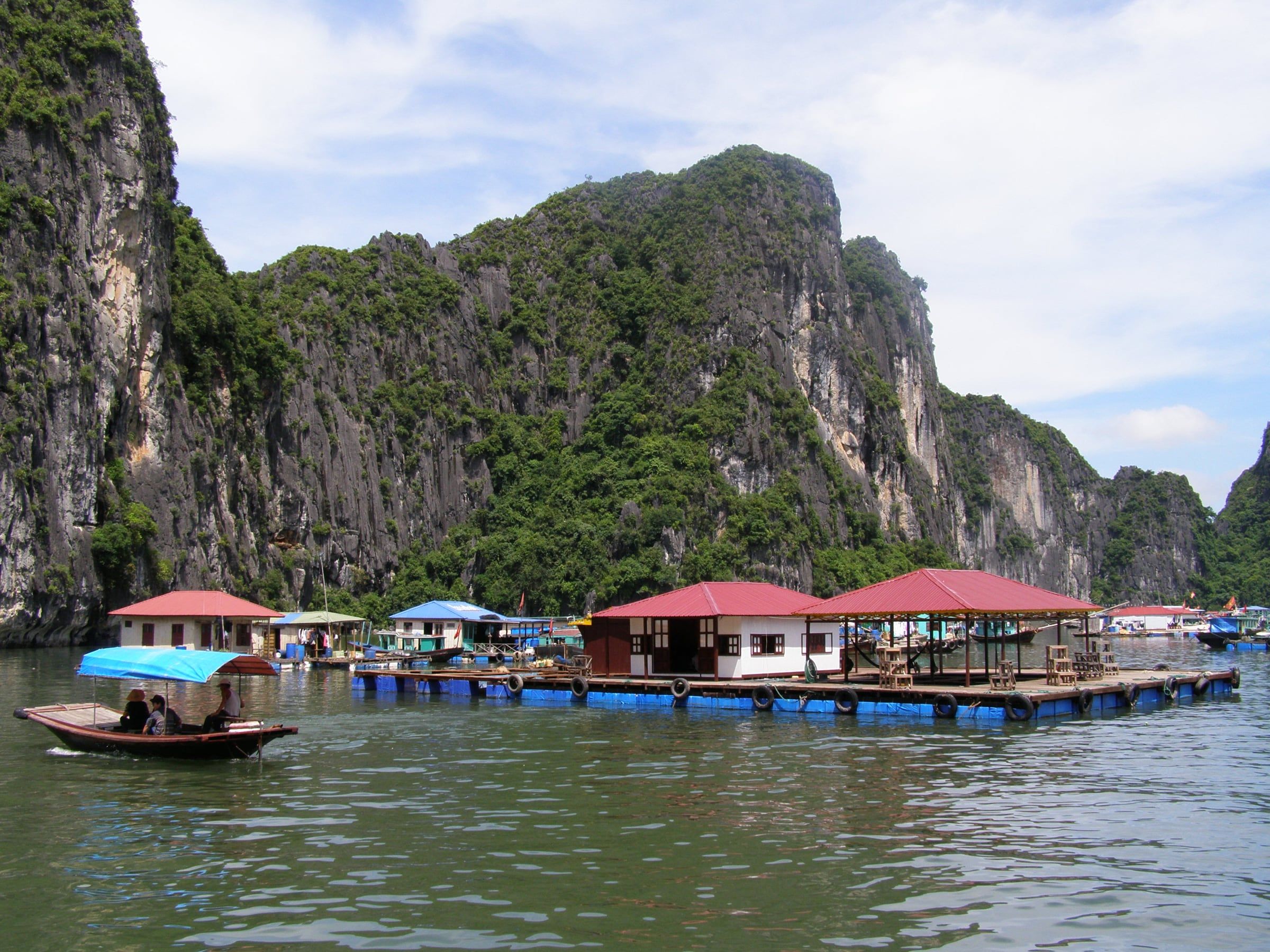
Vịnh Hạ Long Floating houses with red and blue roofs stand on a long blue pontoon below a steep forested limestone hill, with a small covered boat passing at left in Hạ Long Bay. Photo: RG72, CC BY-SA 4.0 -
Vịnh Hạ Long A floating house with teal walls and an orange corrugated roof stands on blue barrels beside a tarpaulin-covered boat, below a limestone cliff in Hạ Long Bay.
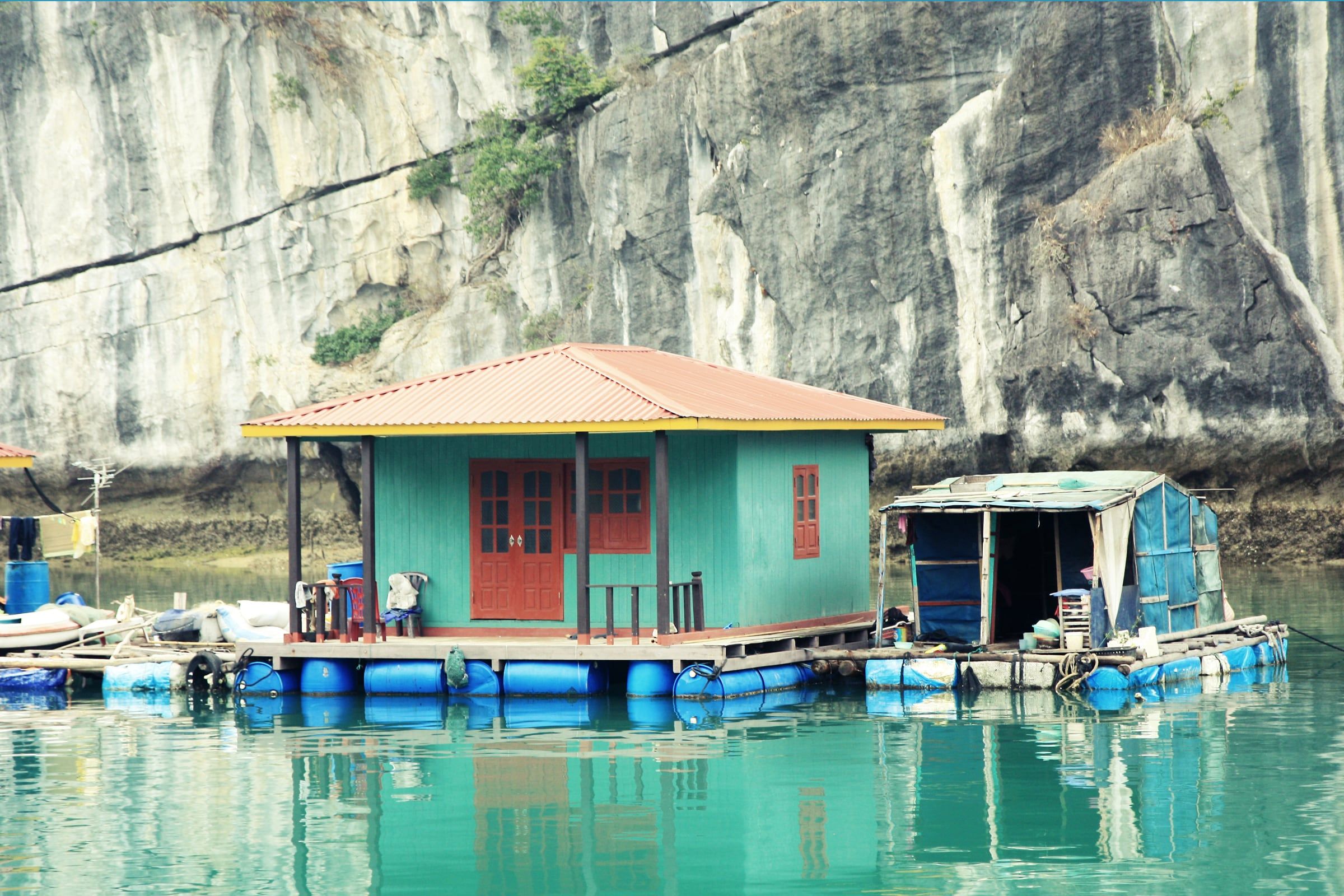
Vịnh Hạ Long A floating house with teal walls and an orange corrugated roof stands on blue barrels beside a tarpaulin-covered boat, below a limestone cliff in Hạ Long Bay. Photo: Andrea Schaffer from Sydney, Australia, CC BY 2.0 -
Vịnh Hạ Long Rowers in conical hats wait in small wooden boats beside a green-roofed floating shelter in morning mist between limestone cliffs in Hạ Long Bay.
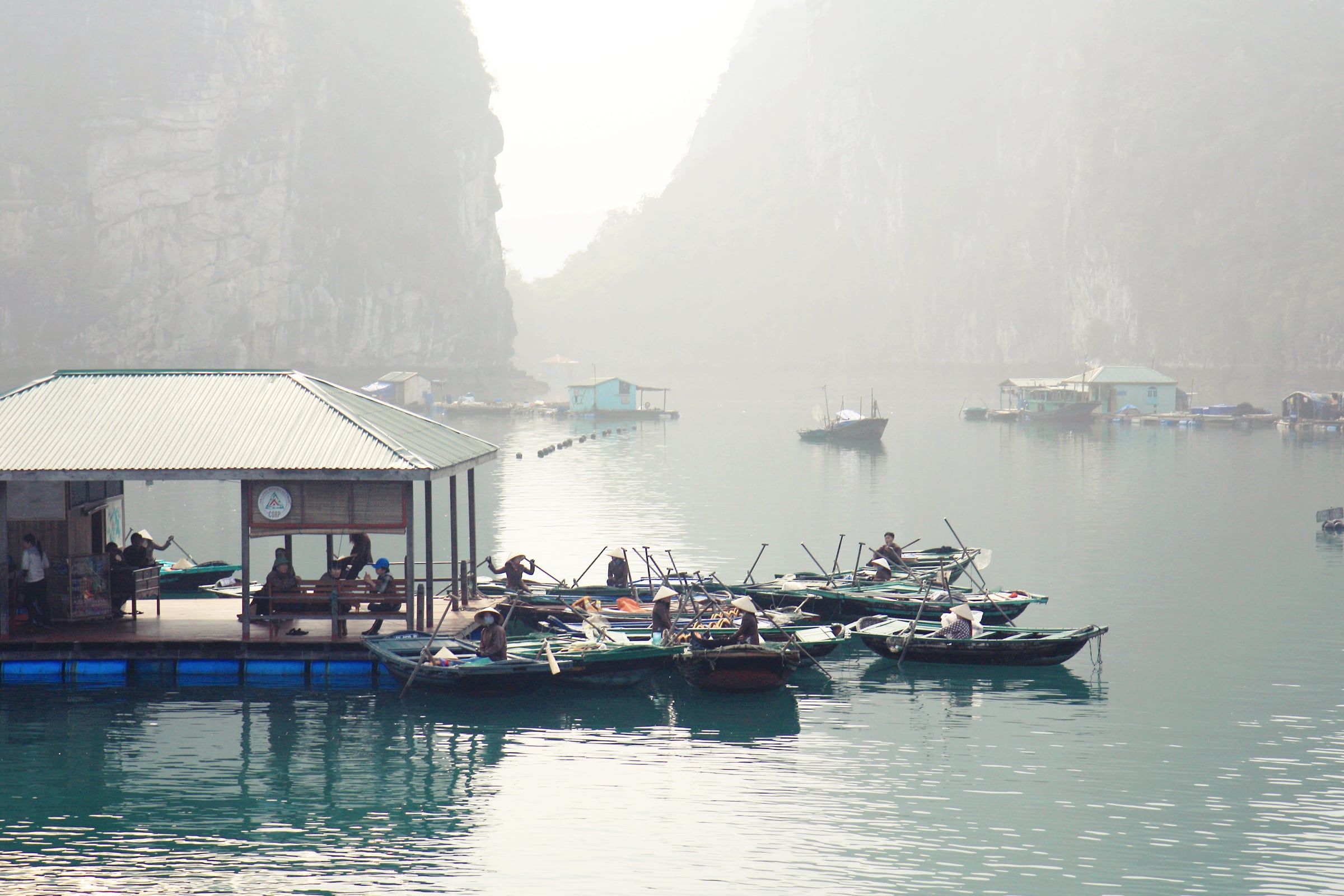
Vịnh Hạ Long Rowers in conical hats wait in small wooden boats beside a green-roofed floating shelter in morning mist between limestone cliffs in Hạ Long Bay. Photo: Andrea Schaffer from Sydney, Australia, CC BY 2.0 -
Vịnh Hạ Long A rower in a red top crosses calm green water in a small wooden boat in front of floating houses and moored boats below wooded cliffs in Hạ Long Bay.
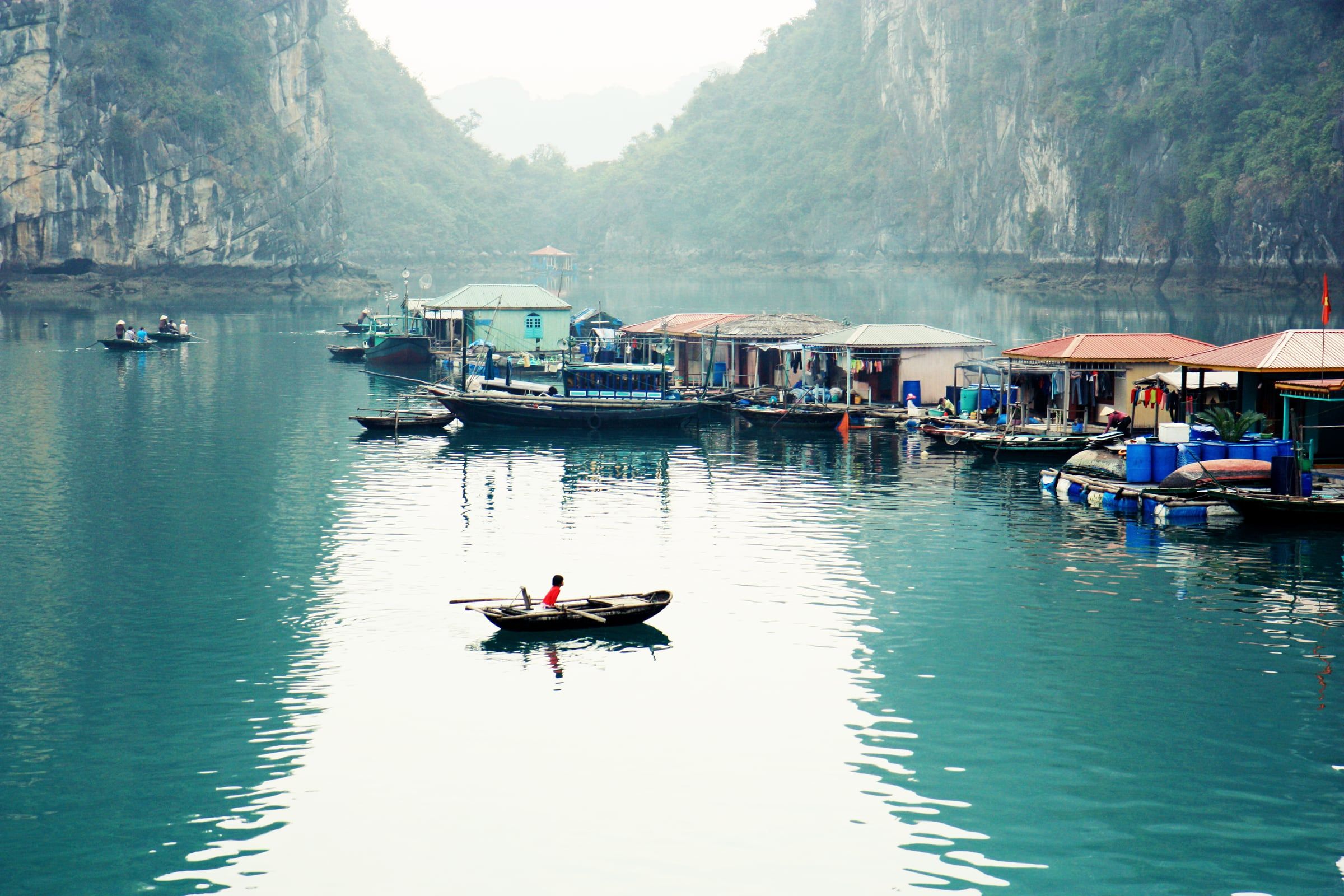
Vịnh Hạ Long A rower in a red top crosses calm green water in a small wooden boat in front of floating houses and moored boats below wooded cliffs in Hạ Long Bay. Photo: Andrea Schaffer from Sydney, Australia, CC BY 2.0
Life on the water, filmed in 2010
Film by UNESCO, shown from YouTube when you press play.
A short film made by NHK for UNESCO in 2010, four years before the move ashore. From 1:43 it shows houses on rafts, a woman washing, people living from fishing and children who row to school. The village is not named.
It records a way of life the tourist villages no longer have: their resident communities were moved ashore in 2014.
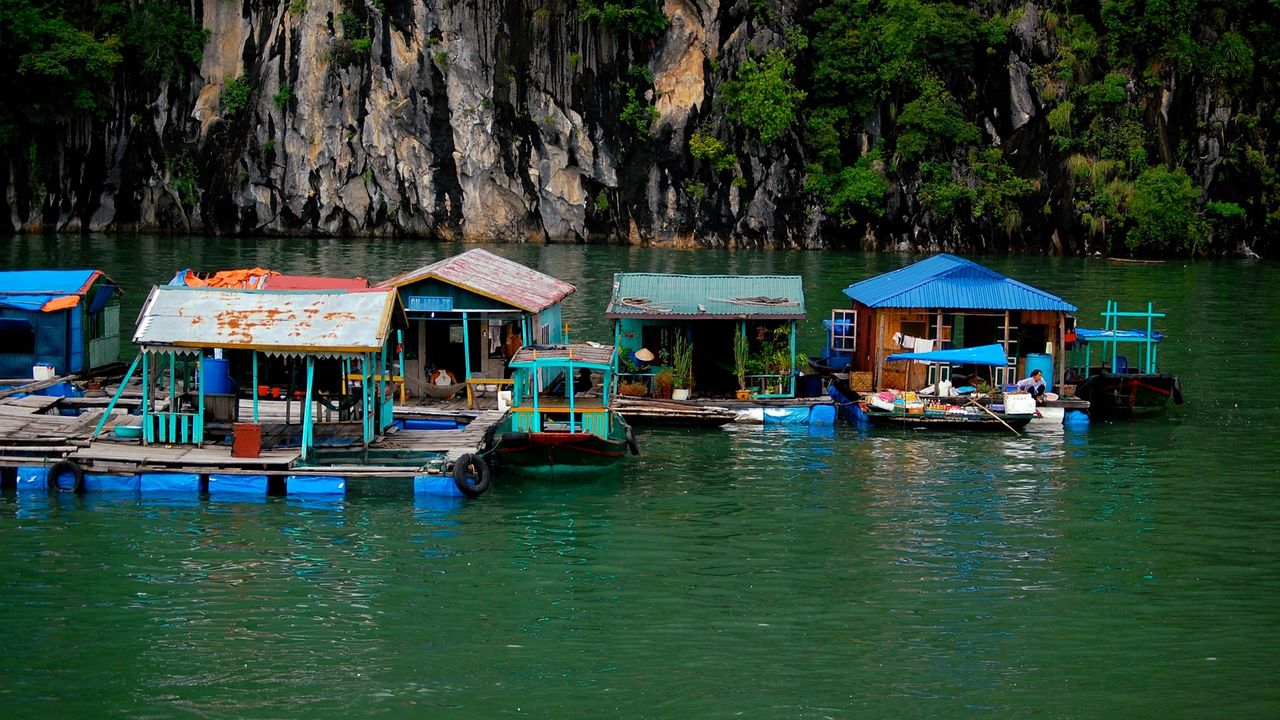
Cua Van floating village
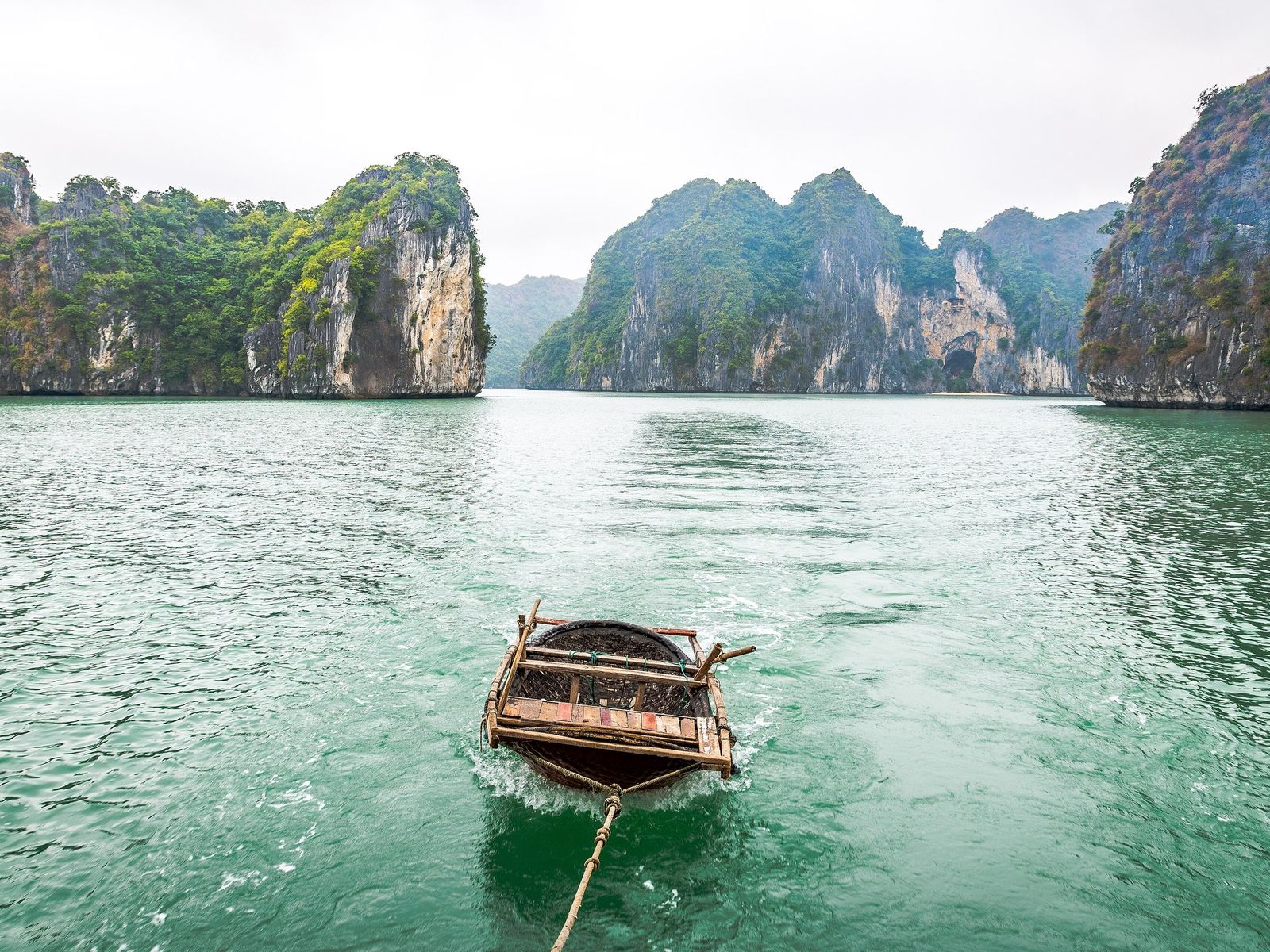
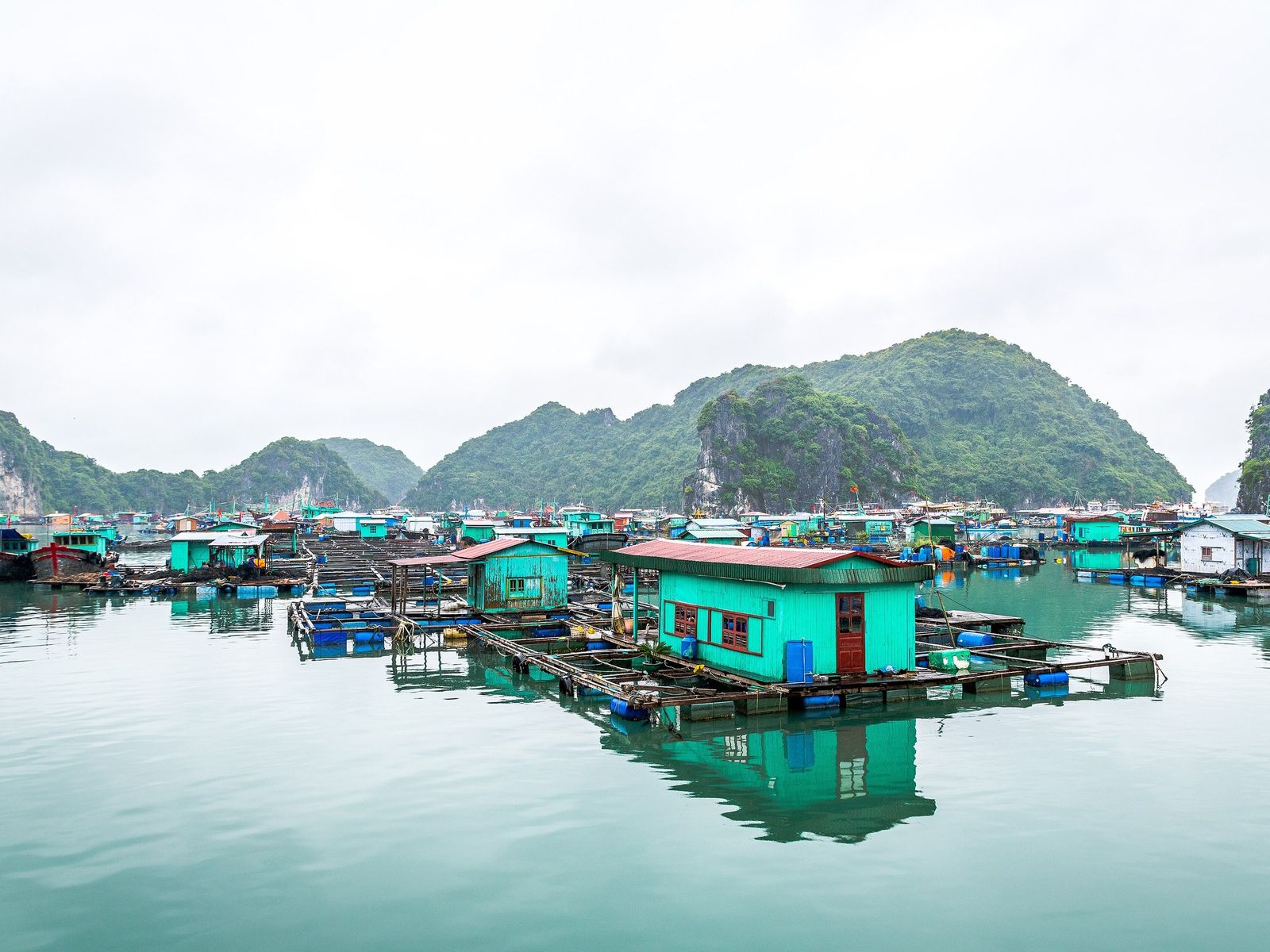
Cửa Vạn often appears in “most beautiful village” claims. They come from list articles: a Travel + Leisure slideshow of September 2014 that put it ninth of sixteen coastal towns, a Huffington Post list of August 2015 and a blog list that existed by April 2012. Their figures of about 700 people and a floating school describe the village before 2014, and none of them is a UNESCO or government ranking.
Vung Vieng fishing village
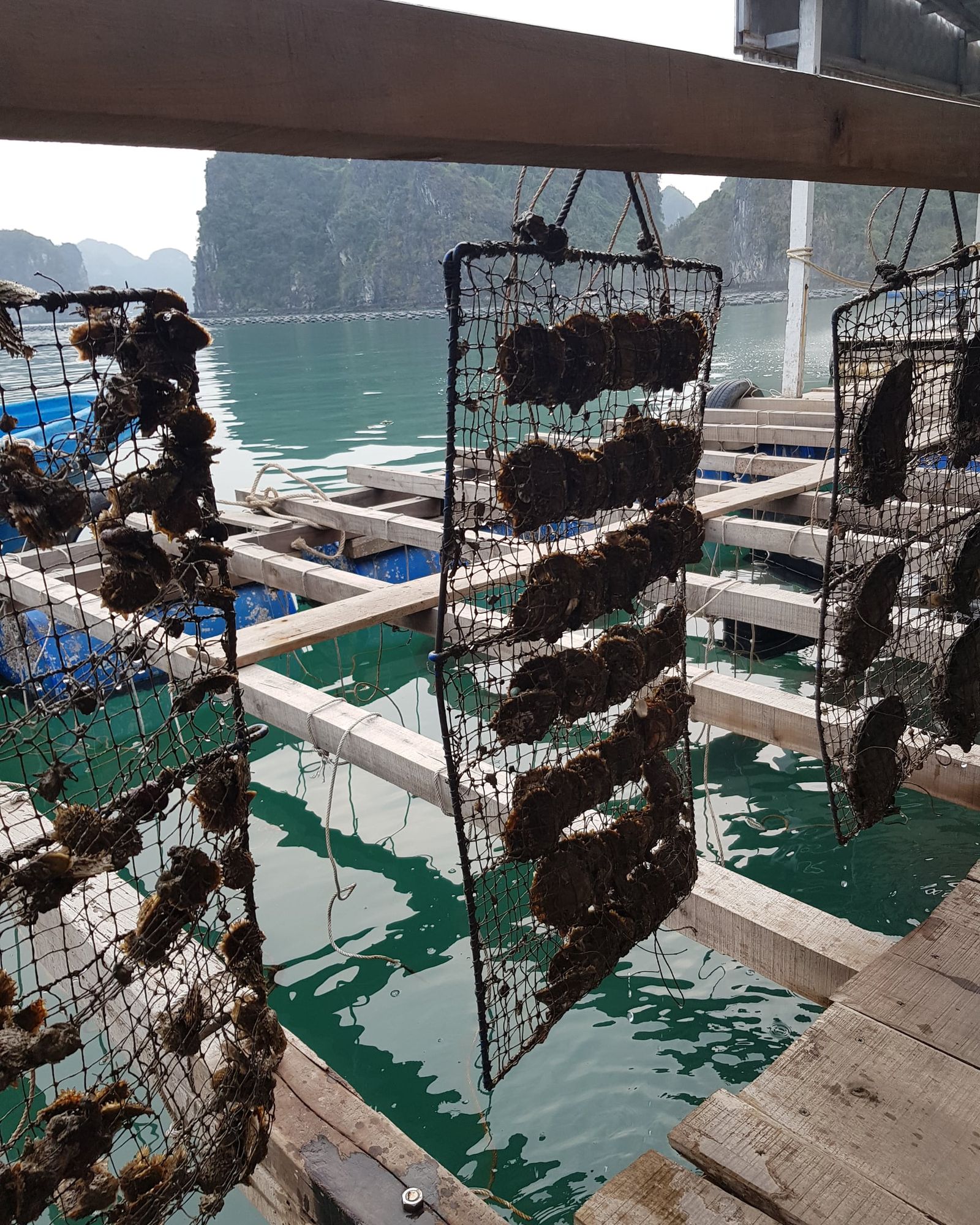
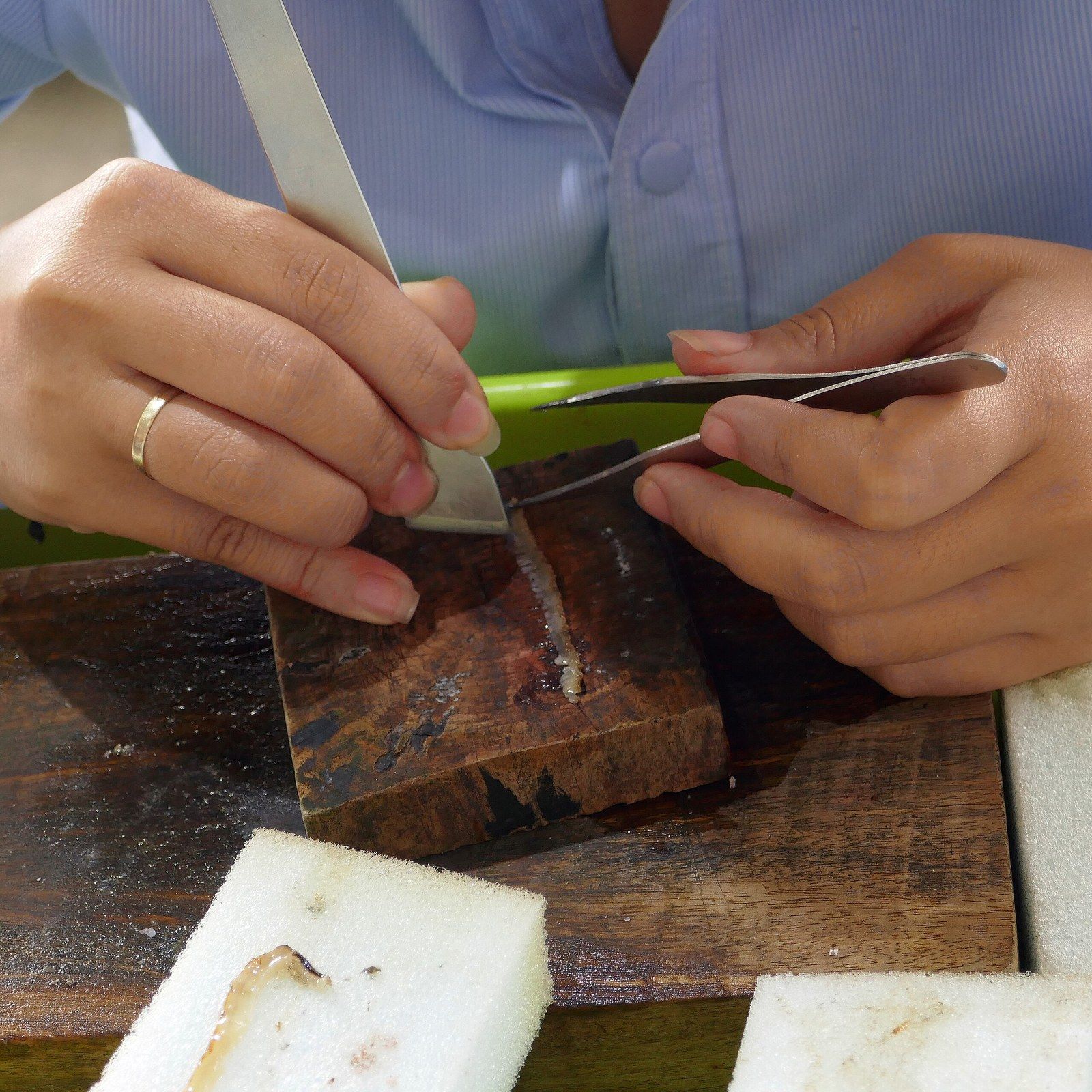
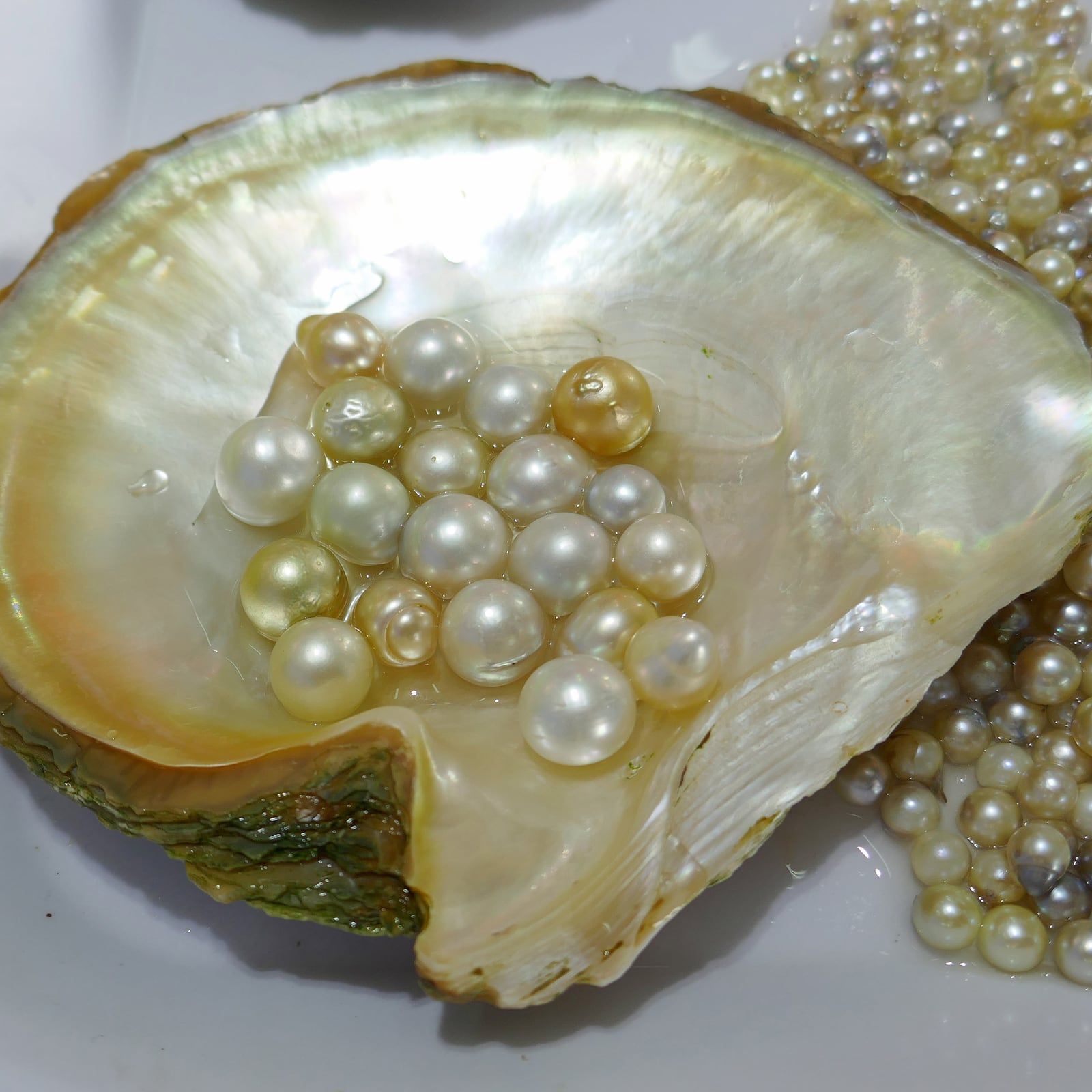
Ba Hang and other villages
Ba Hang, where visitors go by woven boat or kayak through three caves into saltwater lakes, is a stop on routes 1 and 5. Beyond the caves lie fish-farm rafts where grouper and other fish are raised, and the rowers are local people working through a cooperative set up in 2008. Typhoon Yagi destroyed the rowing and kayak point in September 2024, and visitors were back within a fortnight. Ba Hang’s eligible households were among those moved to Hà Phong in 2014, and a kayak or rowing boat costs 40,000 VND per person on the Board’s 2024 list.
Other names turn up in older sources. Cặp Dè was a sea area of Hùng Thắng ward, apparently tied to Vung Viêng, and no source from the 2020s describes a village there. Cống Tàu is named in press histories as one of the villages whose people descend from the Giang Võng and Trúc Võng fishers, but no official source gives its location. Neither is on an official route. Tour companies also describe a small village at Cống Đầm, where the Board’s price list bundles kayaking into some cruise prices, but no official count or route stop has been found.
Visiting respectfully
The Board publishes rules for the whole bay: no single-use plastic, no litter, tickets bought only inside the port terminals and nothing bought from vendor boats. It publishes no village code on photography, gifts or tipping. Rowing and kayaking are available only at licensed points, are priced separately from the sightseeing ticket and are paid to the operator.
- Stay off the raft houses at Cửa Vạn. Guests are not taken aboard them, and at Vung Viêng motor boats keep away from the village.
- Bring nothing disposable. Single-use plastic has been banned on the bay since 1 September 2019, and the ticket gates check.
- Pay the posted price. Boats and kayaks are run by contracted operators at listed prices, and tour boats may not rent out their own kayaks.
- Think twice about vendor boats. Small vendor boats come alongside tour boats, and the Board advises against buying from them.
- Leave the boat families in peace. The families who still live on boats near the shore are not part of any tour.
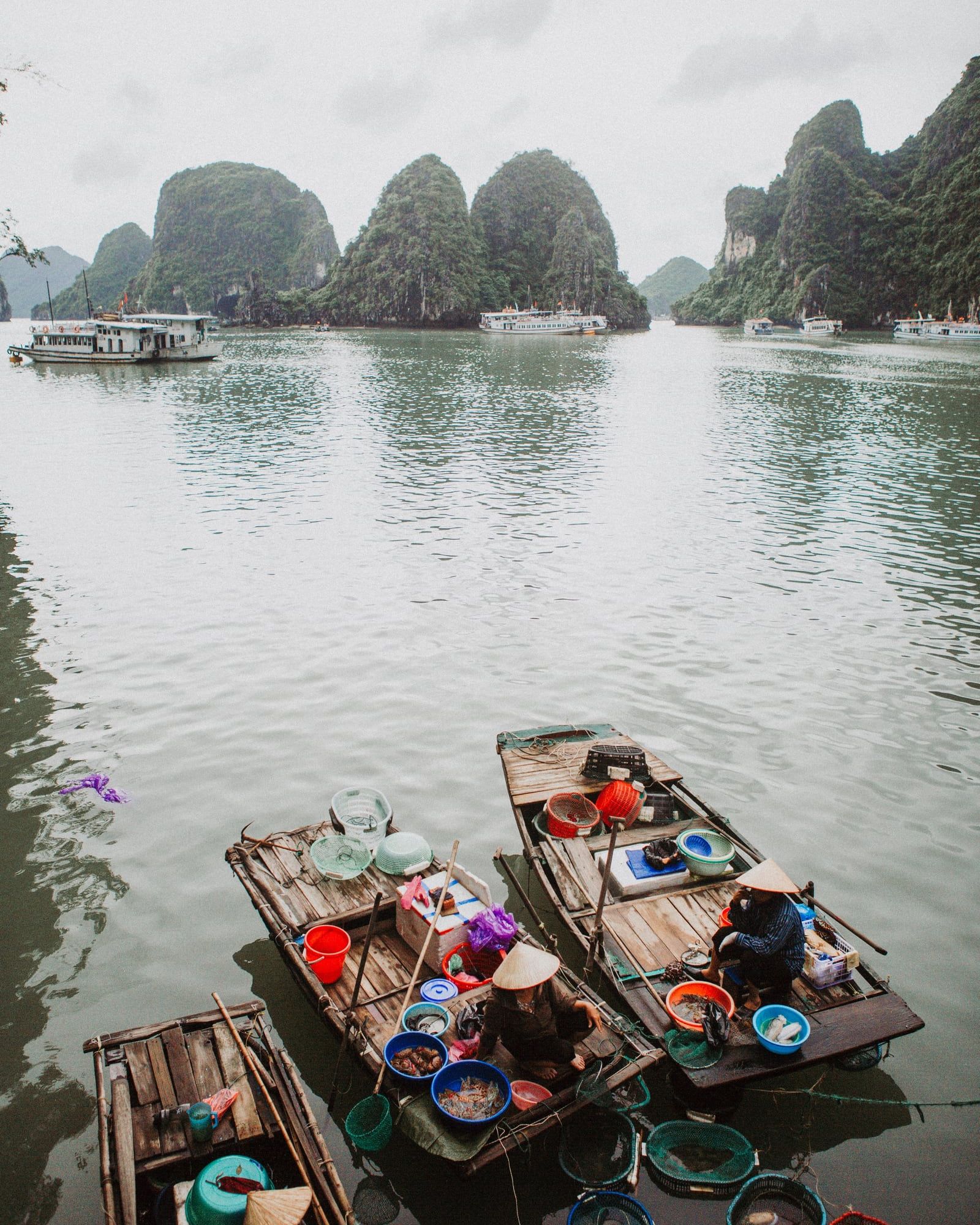
| Service | Price |
|---|---|
| Rowing boat at Cửa Vạn | 60,000 VND per person per hour |
| Kayak at Cửa Vạn | 100,000 VND per kayak per hour |
| Bamboo basket boat at Vung Viêng | 50,000 VND per person per hour |
| Kayak at Vung Viêng | 50,000 VND per person per hour |
| Traditional dragon boat at Vung Viêng | 100,000 VND per person per hour |
| Rowing boat at Ba Hang | 40,000 VND per person |
| Kayak at Ba Hang | 40,000 VND per person |
Questions visitors ask
Do people still live in the floating villages?
The resident communities of the tourist villages were moved ashore in 2014, and the Board says the whole fishing community was moved. Small groups of families who did not qualify for housing still live on boats in the bay, and they are not a visitor attraction.
Is the Cua Van Floating Cultural Centre open?
No. It has been closed to visits since 25 April 2024, was badly damaged by Typhoon Yagi in September 2024 and had no reopening date in April 2026, although the Board’s route 3 page still lists it as a stop.
Which route goes to which village?
Cửa Vạn is on route 3 and Vung Viêng on route 4, and both are mostly seen on overnight cruises because they lie far from the ports. Ba Hang is on routes 1 and 5. The cruises page explains how the routes and boats work.
Can you stay overnight with a fishing family?
No official homestay has been found. One December 2024 report says some Vung Viêng rafts have overnight rooms.
Is Vung Vieng in Ha Long Bay or Bai Tu Long Bay?
The Board’s route and English pages put it in Ha Long Bay on route 4, while its March 2026 article and VOV place it in the Bái Tử Long area. Either way it is about 20 km from Tuần Châu port.
Sources
Facts checked- Ha Long Bay - Yen Tu World Heritage Management Board, 30 năm - một chặng đường di sản vịnh Hạ Long, updated 12 November 2024.
- Ha Long Bay - Yen Tu World Heritage Management Board, Place pages for Cửa Vạn and Vông Viêng, and the route pages for VHL1, VHL3 and VHL4.
- Ha Long Bay - Yen Tu World Heritage Management Board, Dịch vụ chèo đò, chèo kayak (rowing and kayak price list), updated 9 November 2024.
- Ha Long Bay - Yen Tu World Heritage Management Board, History series on the fishing community, updated 1 July 2026.
- Ha Long Bay - Yen Tu World Heritage Management Board, Articles on Vung Viêng (19 March and 30 July 2026), Ba Hang (11 March 2026), hát giao duyên (27 February 2026) and Hạ Long Pearl (18 June and 8 September 2026).
- Ha Long Bay - Yen Tu World Heritage Management Board, Thời gian đón khách tham quan (visiting hours), updated 6 November 2024.
- Ha Long Bay - Yen Tu World Heritage Management Board, Lưu ý khi tham quan vịnh Hạ Long (visitor rules), 6 September 2024.
- Báo Quảng Ninh, Từ 25/4: Tạm dừng đón khách tham quan Trung tâm Văn hoá nổi Cửa Vạn, 11 April 2024.
- Báo Quảng Ninh, Đi tìm câu hát giao duyên trên vịnh Hạ Long, parts 1 and 2, 12 and 19 April 2026.
- Báo Quảng Ninh, Làm sao để hồi sinh di sản làng chài trên Vịnh Hạ Long?, 15 October 2023.
- Báo Quảng Ninh, Reports on the resettlement of the fishing villages, 24 June 2013, 10 July 2014, 3 September 2014 and 8 January 2016.
- Thủy sản Việt Nam, Report on clearing the rafts from the bay, late 2013.
- Nhân Dân, Giấc mơ đất liền... còn dang dở, 24 November 2019.
- Nhân Dân, Giải pháp sinh kế bền vững cho người dân vùng lõi Vịnh Hạ Long, 11 December 2024.
- Tiền Phong, Mắc nợ làng chài, 21 June 2023.
- Tuổi Trẻ, Vịnh Hạ Long mở lại 3 tuyến đón khách du lịch sau bão Yagi, 13 September 2024.
- VOV World, Reports on Vung Viêng, 15 August 2024 and 9 April 2026.
- IUCN, World Heritage technical evaluation (document 205800), 2022.
Prices, fees and timetables change. Figures on this page were checked in the month shown on the postmark.