Sung Sot Cave (Surprise Cave)
Sửng Sốt is the largest cave open to visitors, about 10,000 m², and the busiest, with about 1.857 million visits in 2024. You reach it on route 2.
Is Sung Sot Cave worth visiting?
Yes, for the scale of the last chamber, where a dome pocked with scallop shapes rises over a broad floor and daylight comes in through an opening in the roof. Go ready for crowds in summer and on holidays, steep steps and slippery floors.
Worth going for
- The largest cave open to visitors in the bay
- A dome carved by an ancient underground river
- Daylight falling through an opening in the roof
- Good acoustics in the last chamber
Be ready for
- Crowds at summer peaks and on public holidays
- About 60 steps in all, some of them steep
- Floors that can be slippery
- No published step-free access
How many steps to Sung Sot Cave?
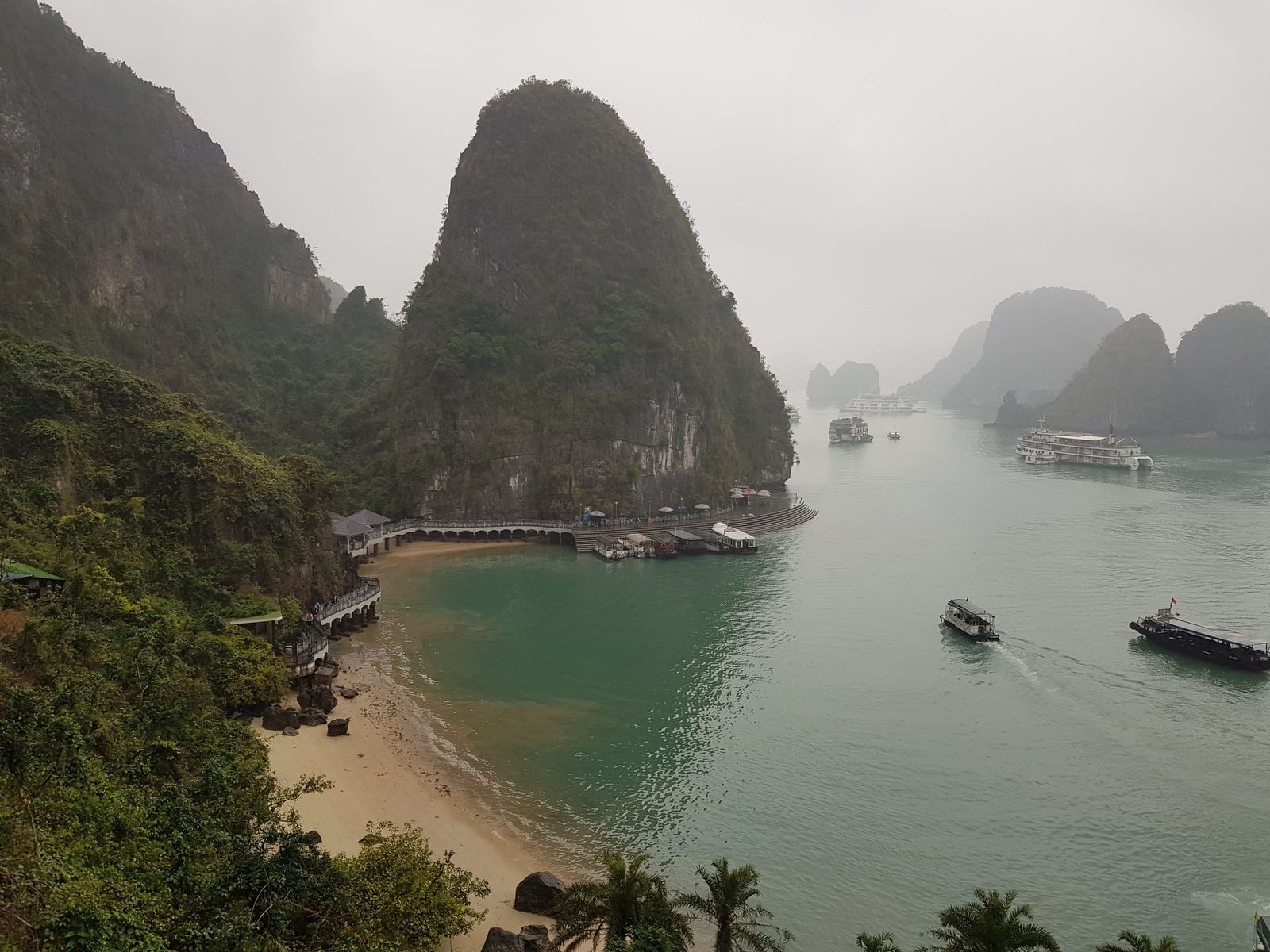
About 50 steep steps climb from the pier, and then more than 10 steps lead down to the entrance, roughly 60 in all. That figure comes from a 2019 press count, as the bay’s management board, the Ha Long Bay - Yen Tu World Heritage Management Board, publishes none. The Board’s own figure is the entrance height, about 20 m above sea level.
- The pier Boats on route 2 land below the cave on Bồ Hòn island.
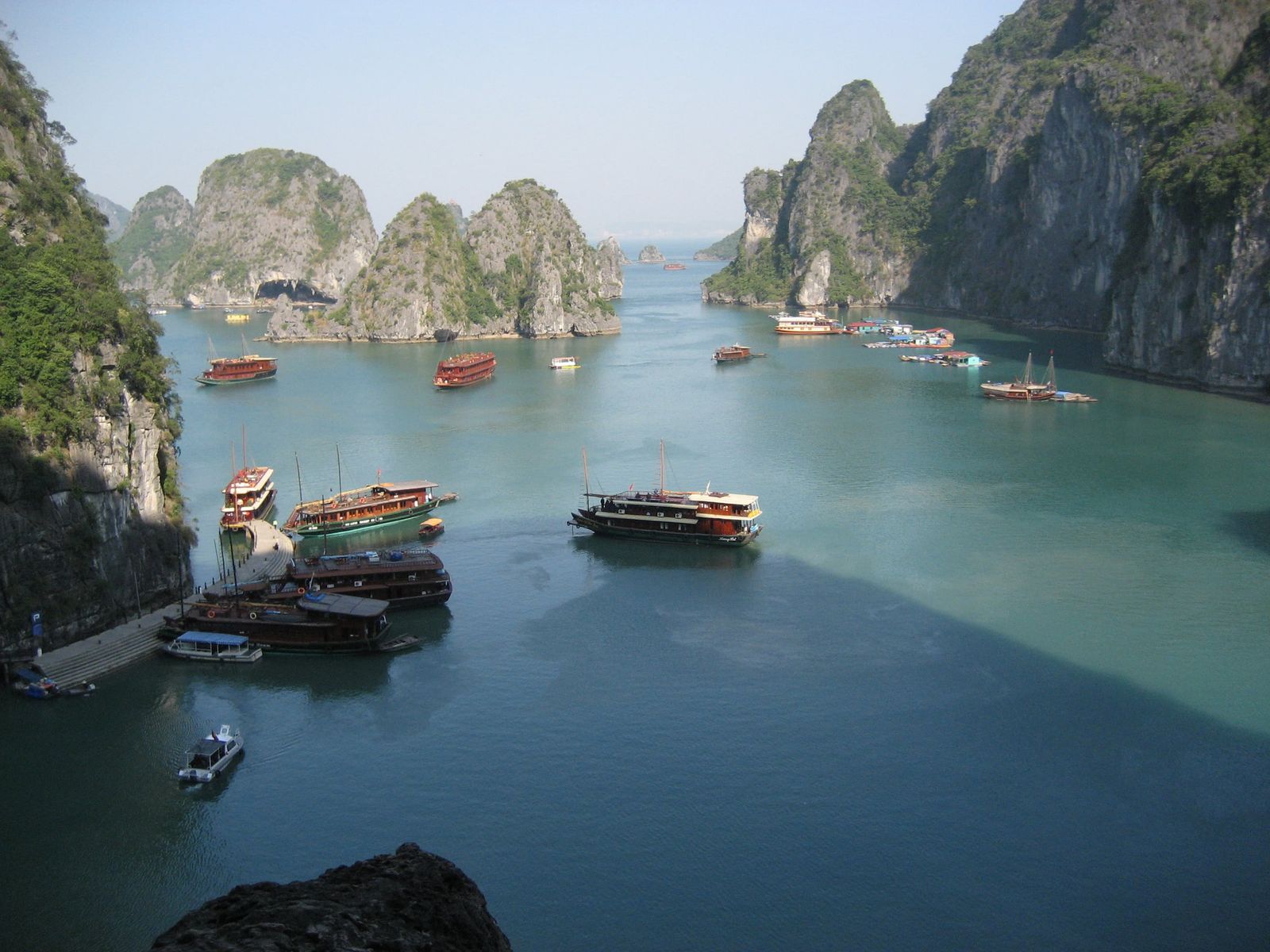
- About 50 steps up A steep stone stair climbs to a high point with a view over the anchorage.
- More than 10 steps down The path drops to the entrance, about 20 m above sea level.
- The first chamber A freshwater lake, a giant column and huge fallen blocks.
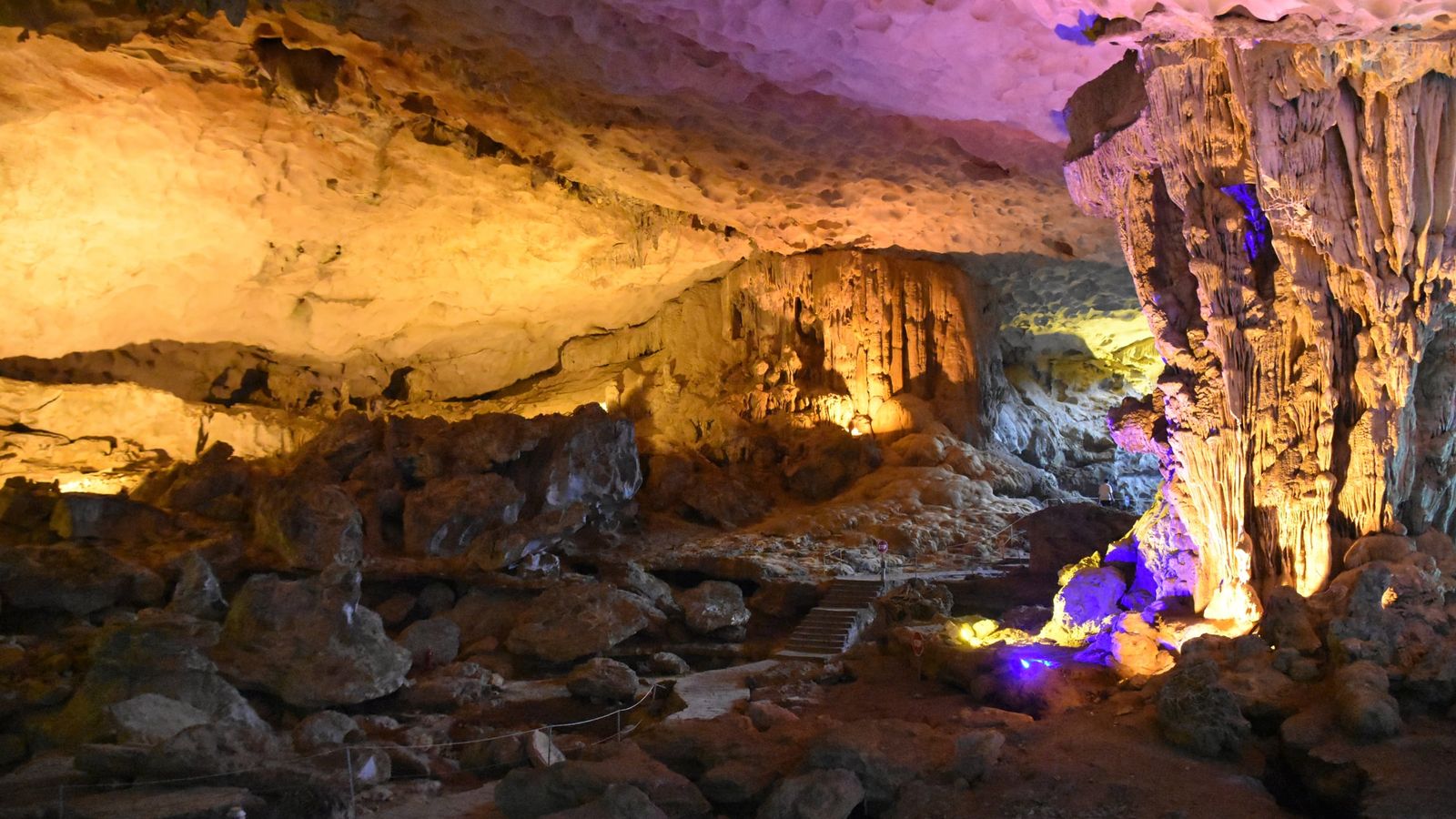
- The last chamber The largest space, with the scalloped dome, the Quan Âm stalagmite and daylight from the roof.
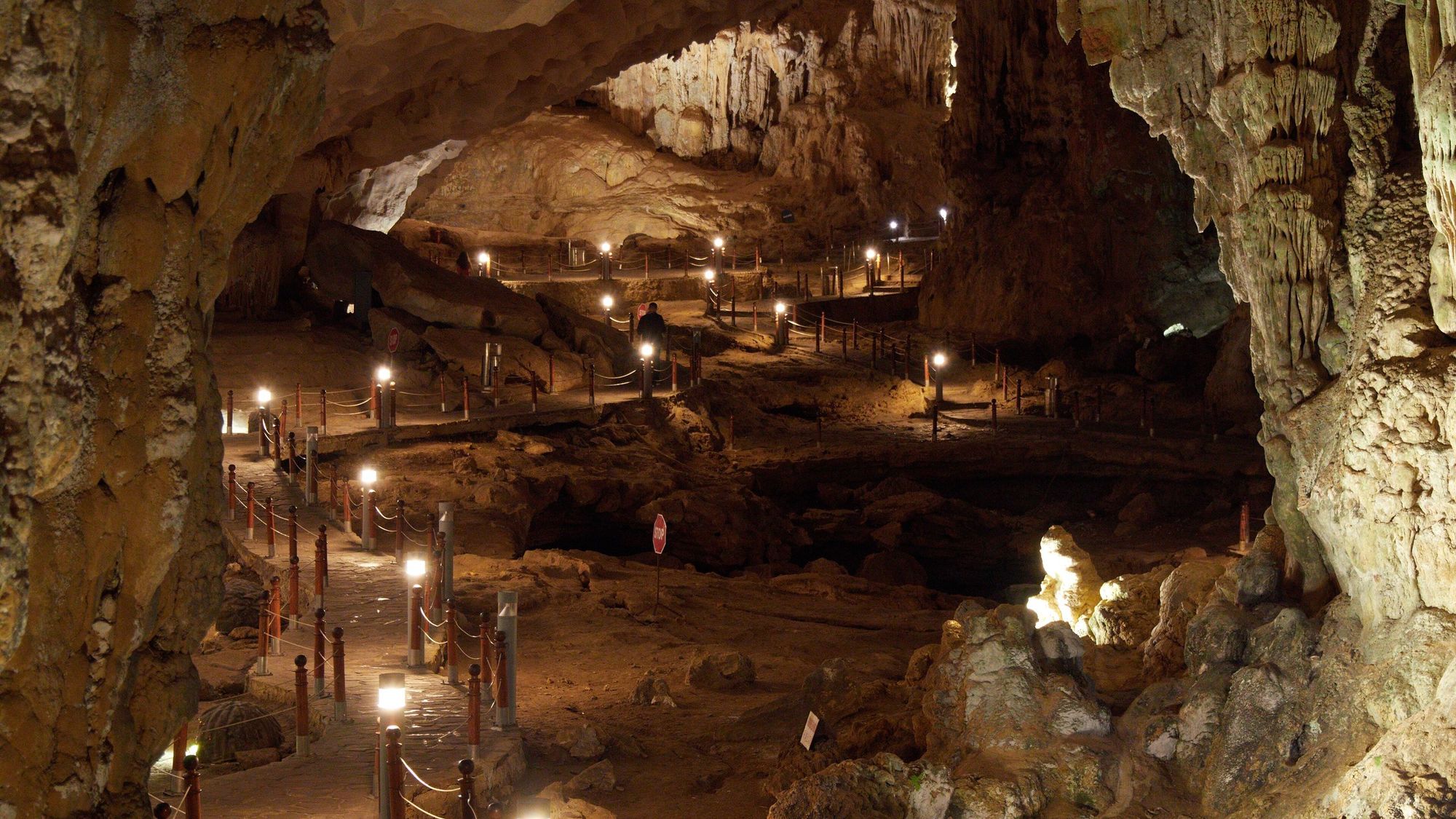
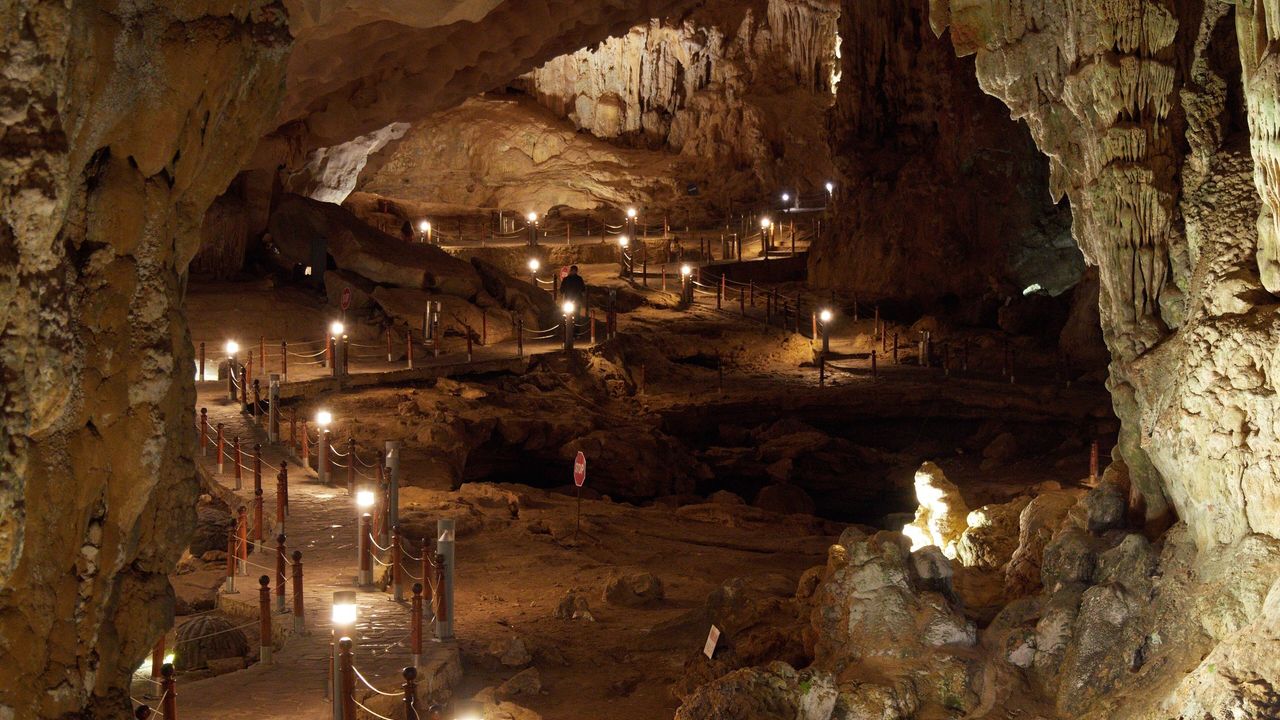
The walkway inside, about 800 m long, was built between January and 1 May 1999, with lighting matched to the daylight from the entrance. No official source describes step-free access to Sửng Sốt or any other cave in the bay.
Inside the cave
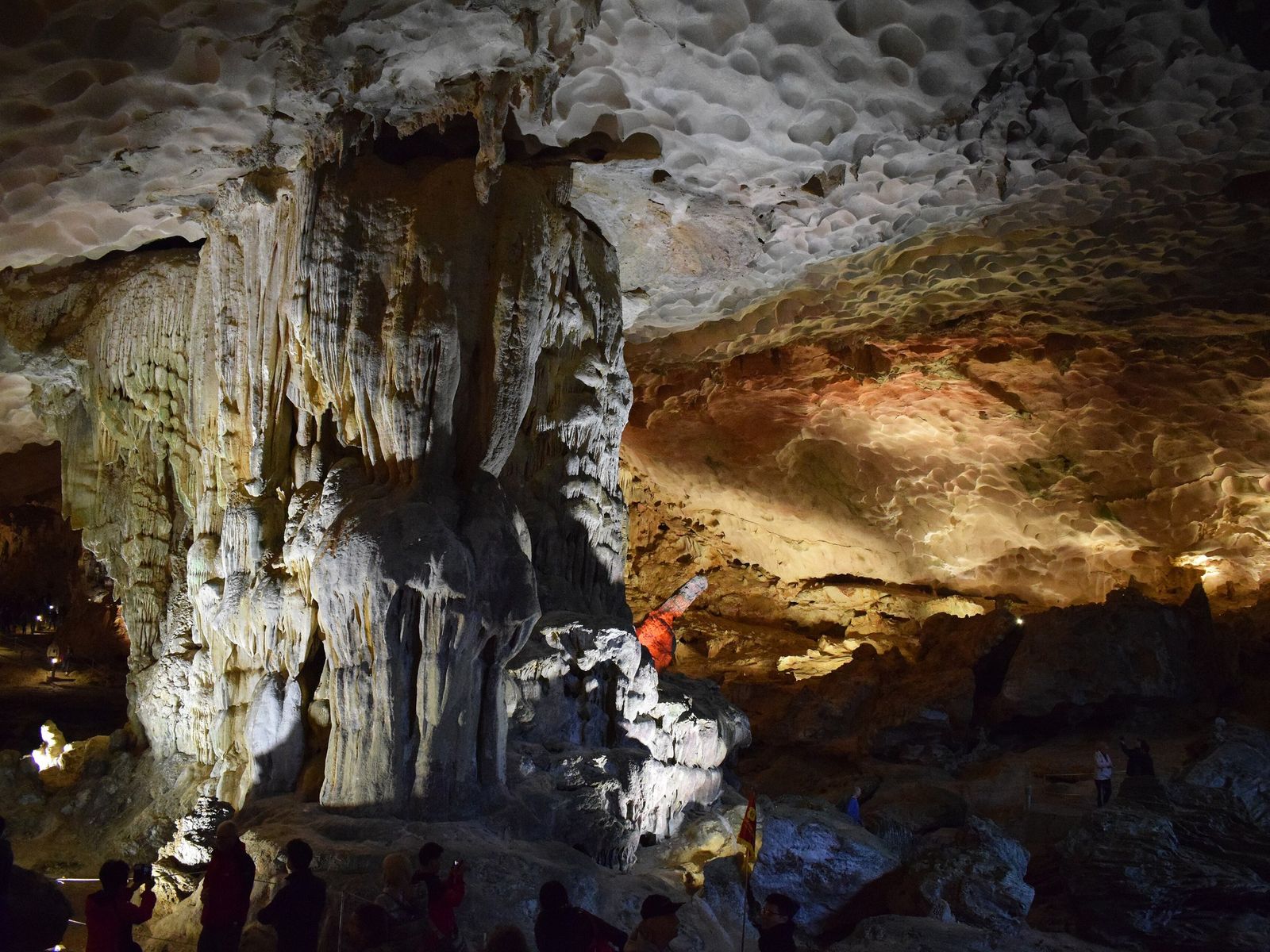
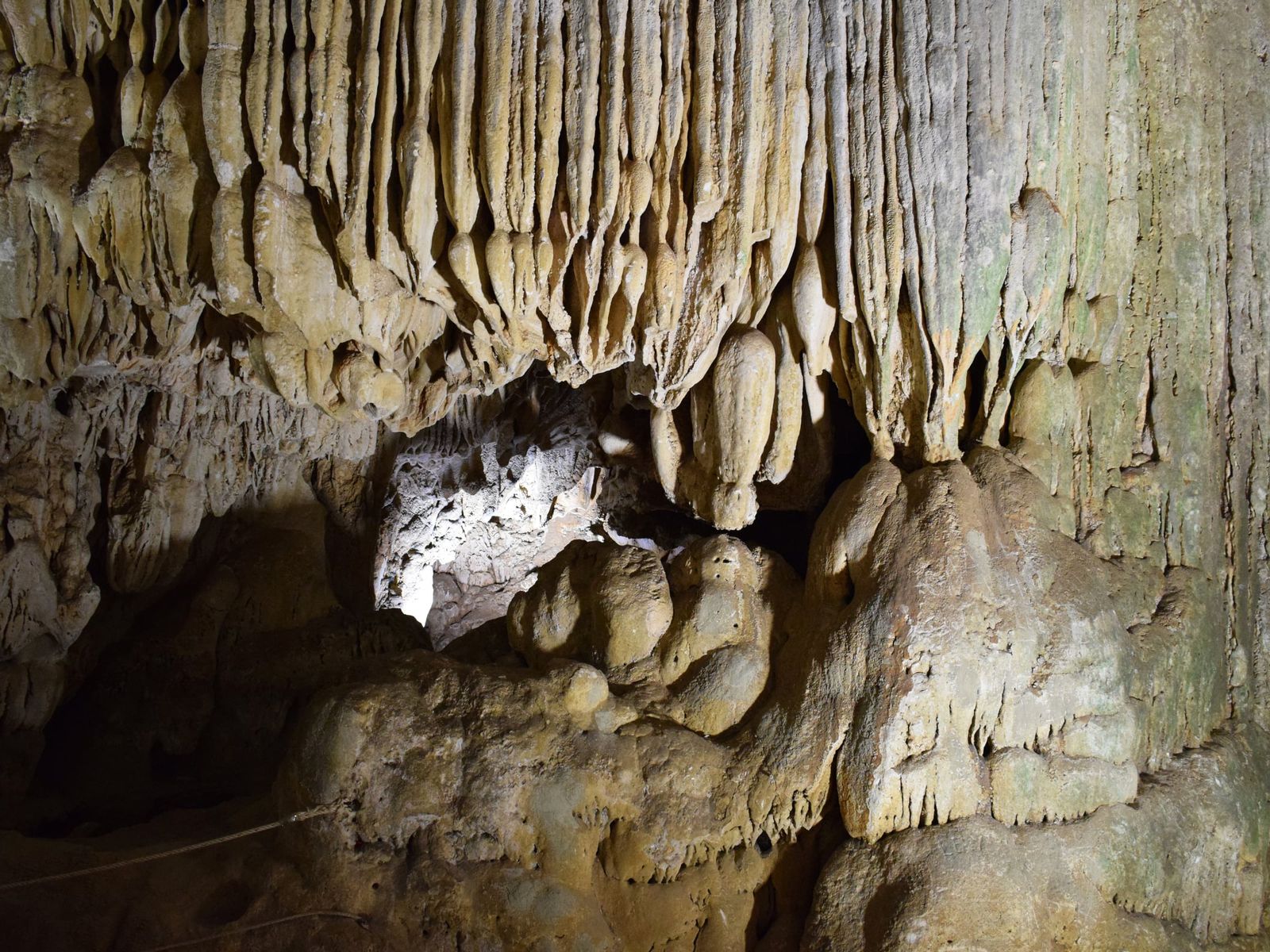
The path passes a freshwater lake and a giant column in the first chamber, then reaches the last and largest chamber, where a scalloped dome carved by an ancient underground river rises above a stalagmite called Quan Âm and daylight comes in from the roof.
The Board’s 2026 articles describe three spaces. In the first, a lake called hồ Thơm lies to the left of the entrance, a giant column runs from ceiling to floor, and huge fallen blocks lie about. The third and last, the Quan Âm chamber, is the largest. Its dome is pocked with scallop shapes like the inside of a shell, the marks of the underground river that carved it, and it holds few stalactites because the roof has no cracks. The stalagmite called Quan Âm (Avalokiteśvara) looks like a sailing junk from a distance.
A walk through Sửng Sốt Cave
Film by Grahil & Fam, shown from YouTube when you press play.
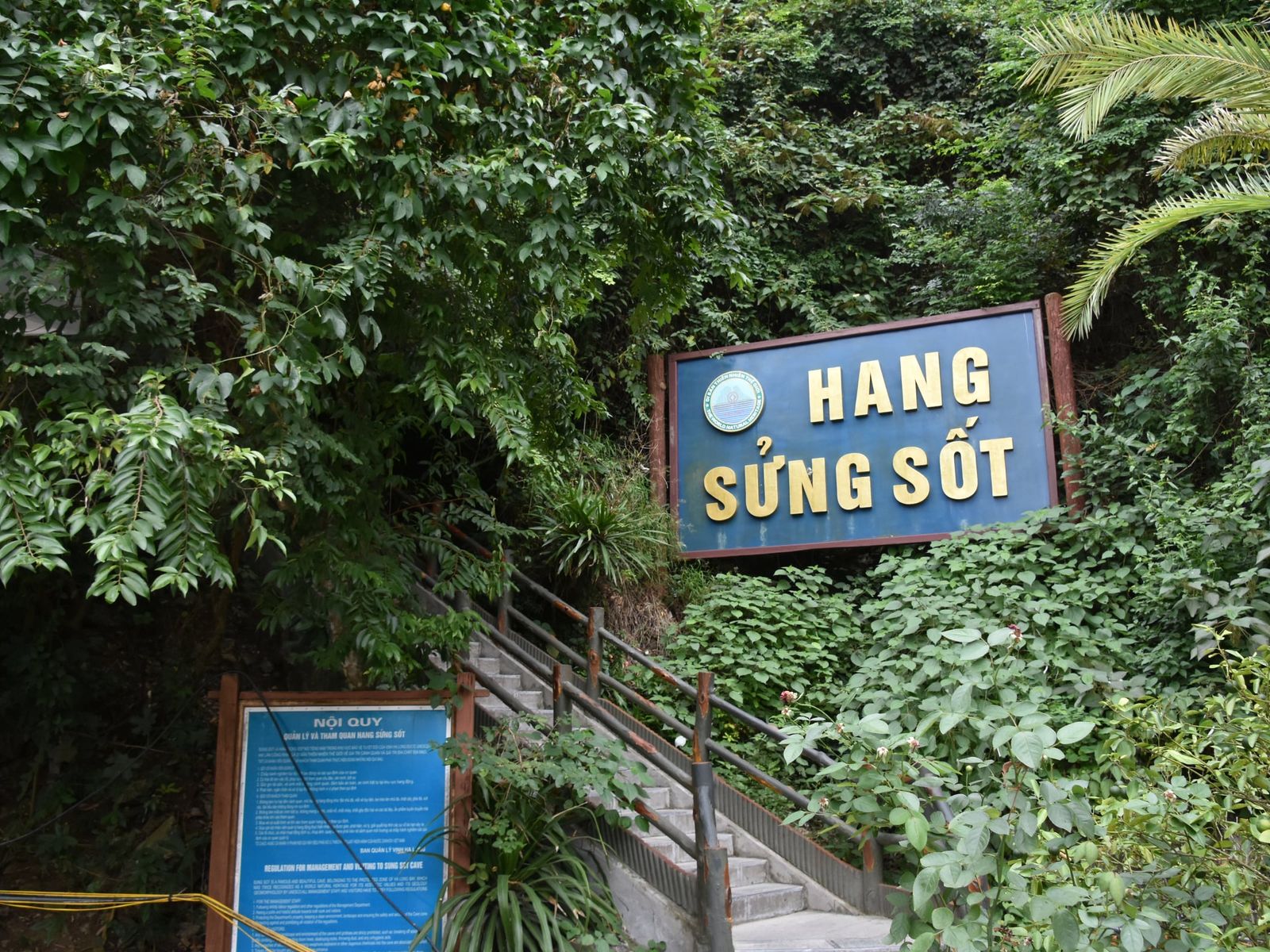
A four-minute film uploaded in August 2025 by the Grahil & Fam channel. It starts with a tender-boat transfer of about ten minutes, follows the climb up the stone steps past the Hang Sửng Sốt sign, then walks through the lit chambers while the guide points out stalactites and rock shapes.
The narration repeats the popular story of the cave’s discovery, which the history below treats with more care.
History and name of Sung Sot Cave
The French knew the cave by the early 20th century, and the name Grotte des Surprises, Surprise Cave in English, appears in a French guide of 1938. The year of naming is disputed: accounts point to visits from 1901, to the 1938 guide and to a French expedition in 1946, and no primary French source for any of them has been found.
| Year | What the account says | Source |
|---|---|---|
| 1901 | The French knew the cave by the early 20th century, and visits are dated from 1901 | Vietnam National Authority of Tourism, destination page (undated) |
| 1938 | The name Grotte des Surprises appears in a French guide | Vietnam National Authority of Tourism, destination page (undated) |
| 1946 | A French expedition named the cave | Báo Quảng Ninh, 30 December 2025 |
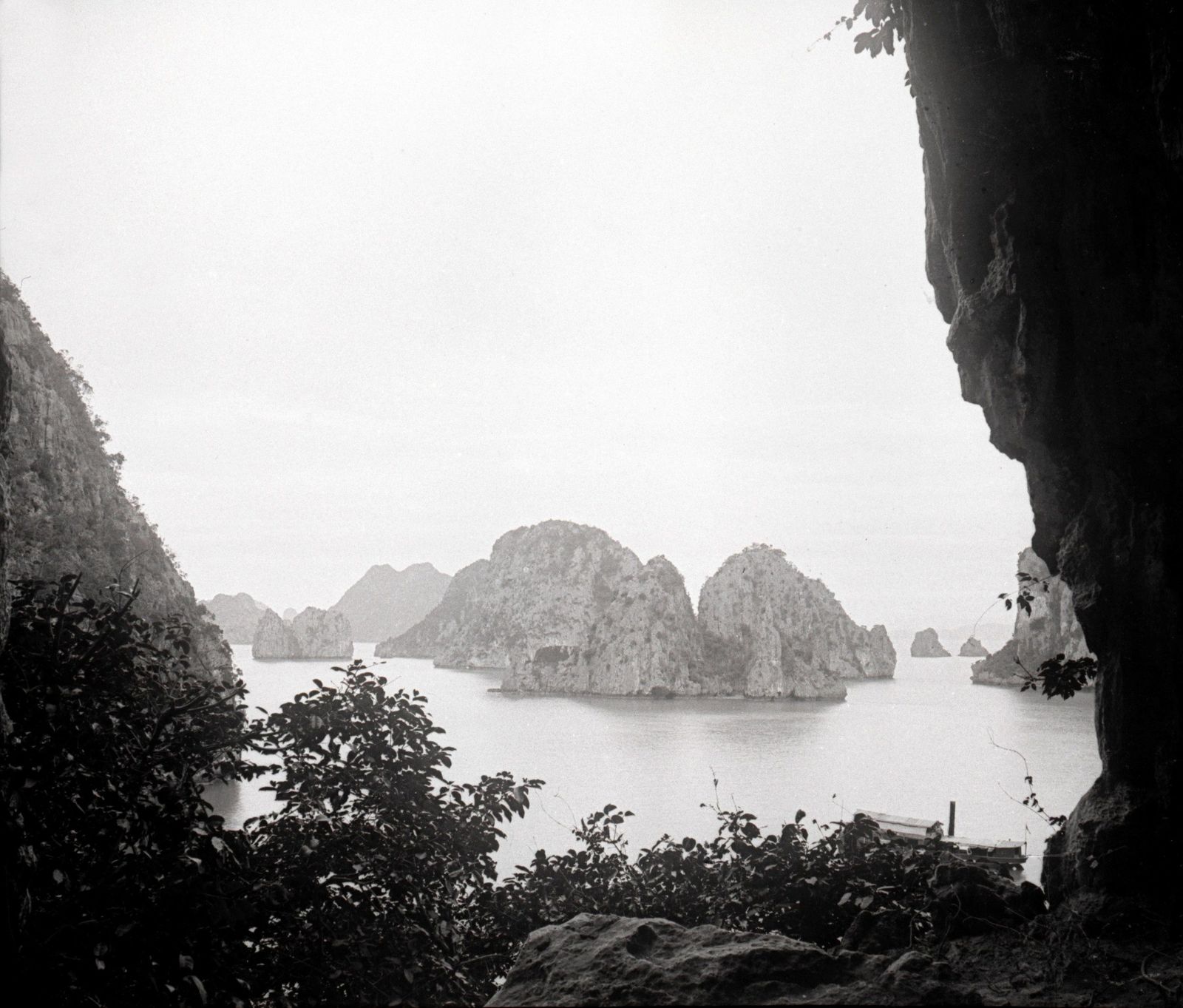
The cave as visitors know it today dates from 1999, when the 800 m walkway and its lighting were built. The photograph here, taken around 1906, looks out over the bay from a cave mouth; which cave it shows was not recorded. For the longer story of the bay, from the first people in its caves to the French charts, read the history and geology page.
How to visit: route, hours and fees
Sửng Sốt is the main cave stop of route 2 (VHL2), which also takes in Đảo Ti Tốp (Ti Top Island), Hang Luồn (Luon Cave) and several smaller caves. The cave is open from 07:30 to 17:30 between 16 April and 31 October and from 07:30 to 17:00 between 1 November and 15 April, and the route fee is 250,000 VND for an adult (checked October 2026).
| Item | Route 2 (VHL2) |
|---|---|
| Stops, in order | Bãi tắm Soi Sim, Đảo Ti Tốp, Hang Sửng Sốt, Vụng Tùng Sâu, Động Mê Cung, Hang Bồ Nâu, Hang Luồn, Hang Trống, Hang Trinh Nữ, Hang Hồ Động Tiên. Soi Sim beach has been closed since 2020. |
| Leaves from and returns to | Tuan Chau International Passenger Port or Ha Long International Passenger Port |
| Time on the water | About 6 hours |
| Cave open, 16 April to 31 October | 07:30 to 17:30 |
| Cave open, 1 November to 15 April | 07:30 to 17:00 |
| Adult sightseeing fee | 250,000 VND |
| Child aged 7 to under 16 | 200,000 VND |
| Child under 1.2 m tall or under 7 | Free |
| Port passenger charge, per person per trip | 60,000 VND |
| Official charges for an adult day trip | 310,000 VND |
One ticket covers every stop on the route, so there is no separate cave ticket. Day boats leave from either port and return to the same one, and Vietnamese citizens aged 60 or over pay half while foreign seniors pay the full fee. Rowing boats and kayaks at Hang Luồn are paid for separately. Fees change, so check the route fee on the planning page before you go.
Tips for a quieter visit
Crowds peak in summer and on public holidays, shoes with good grip help on floors that can be slippery, and a 115 emergency medical team is stationed on Ti Tốp, the other main stop on route 2.
- Go outside the peaks if you can. No source gives a quiet time of day, but every report agrees that summer and the public holidays are the busiest.
- Keep your hands off the rock. Touching has darkened and polished some formations in the busiest caves.
- Eat and drink on the boat. A ban on eating and drinking in the caves was reported in 2016, and in 2025 Quảng Ninh said dining in caves is not licensed.
- Watch the weather. When a storm approaches the authorities stop all departures, as they did from 07:00 on 22 August 2026, and the cave cannot be reached until they lift the stop.
Questions visitors ask
How big is Sung Sot Cave?
About 10,000 m², over 200 m long, up to 80 m wide and up to about 20 m from floor to ceiling, which makes it the largest cave open to visitors in the bay. A figure of 12,200 m² also circulates, but the Board and Báo Quảng Ninh give about 10,000 m².
How long do you spend inside?
No source publishes a typical time in the cave. The Board’s day-boat page gives about 6 hours on the water for the whole of route 2, which includes Ti Tốp and Hang Luồn.
Is Sung Sot Cave the same as Thien Cung Cave?
No. Thiên Cung is a smaller cave of about 3,000 m² on Đầu Gỗ island, visited on route 1. The caves page compares the two with the other caves on the official routes.
What does the route 2 trip cost in total?
The official charges for an adult are 310,000 VND: the 250,000 VND sightseeing fee and the 60,000 VND port charge. Some guides still print 290,000 VND, which adds the port charge as it was before 1 April 2024 (checked October 2026).
Can you visit Sung Sot Cave on an overnight cruise?
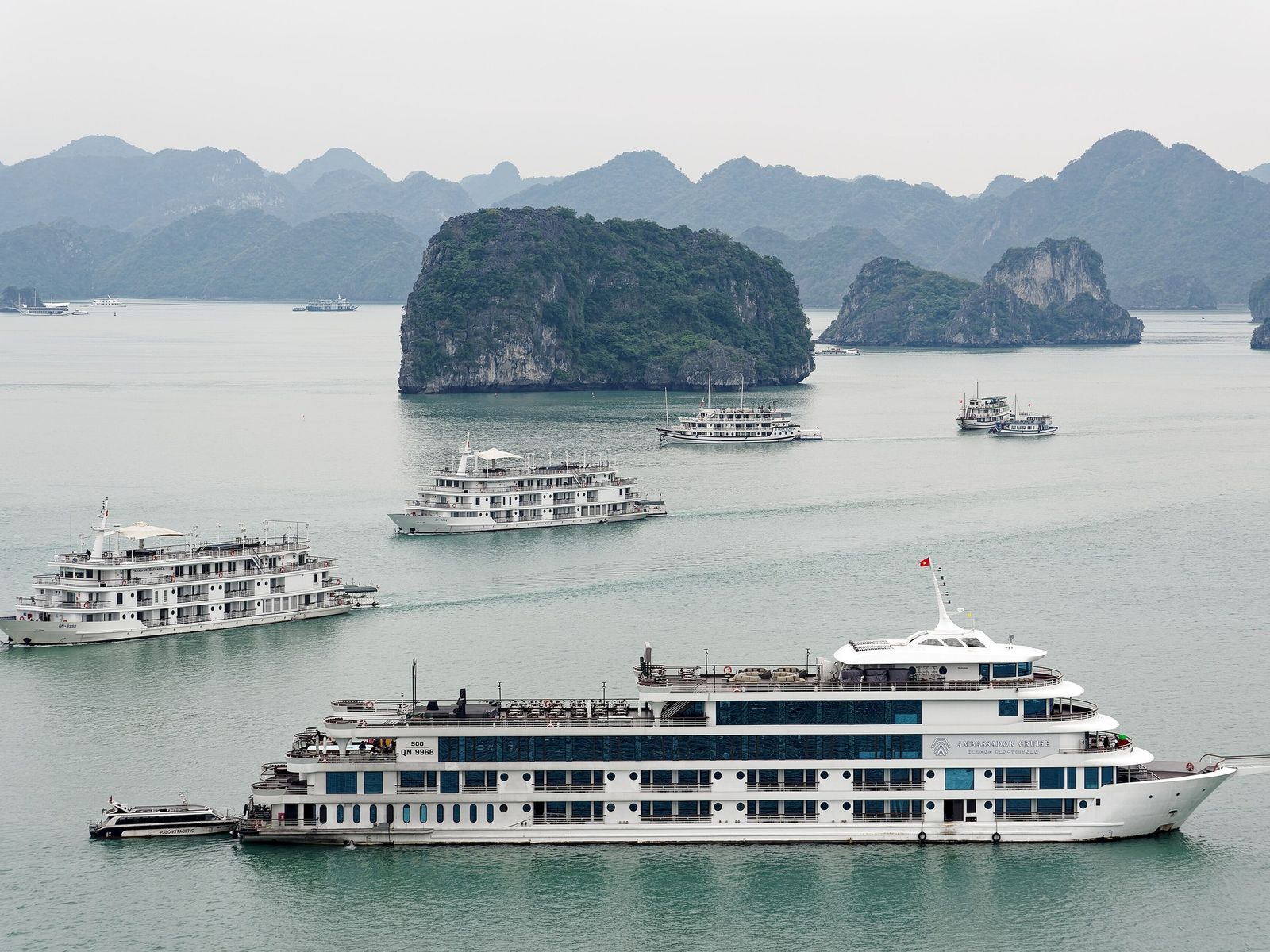
Overnight cruises on route 2 anchor at the Board’s listed anchorages, which include Ti Tốp and the Trống and Trinh Nữ area, and the combined sightseeing and overnight fee for one night on route 2 is 550,000 VND per person (checked October 2026). Which caves a cruise visits is up to its itinerary.
Sources
Facts checked- Báo Quảng Ninh, Khám phá các hang động trên Vịnh Hạ Long, 30 December 2025.
- Ha Long Bay - Yen Tu World Heritage Management Board, Place page: Hang Sửng Sốt.
- Ha Long Bay - Yen Tu World Heritage Management Board, Articles on Hang Sửng Sốt and Bồ Hòn island (30 September 2025, 4 August 2026 and undated pages).
- Ha Long Bay - Yen Tu World Heritage Management Board, Notice on the visitor injured in Hang Sửng Sốt, May 2026.
- Ha Long Bay - Yen Tu World Heritage Management Board, Hành trình VHL2 (route 2).
- Ha Long Bay - Yen Tu World Heritage Management Board, Thời gian đón khách tham quan (visiting hours), updated 6 November 2024.
- Ha Long Bay - Yen Tu World Heritage Management Board, Mức phí tham quan vịnh Hạ Long (sightseeing fees), 31 March 2025.
- Ha Long Bay - Yen Tu World Heritage Management Board, Miễn, giảm phí tham quan vịnh Hạ Long (exemptions and discounts), 2 November 2024.
- Ha Long Bay - Yen Tu World Heritage Management Board, Tàu tham quan ban ngày (day boats), updated 23 March 2026.
- Quảng Ninh Department of Tourism, Notice on port passenger charges at Hạ Long and Tuần Châu, 15 March 2024.
- Vietnam National Authority of Tourism, Destination page: Hang Sửng Sốt.
- Pháp Luật TP.HCM (PLO), Report on the steps at Hang Sửng Sốt, 1 August 2019.
- Thanh Niên, Report on the 24-hour medical post on Ti Tốp, 2 April 2026.
- UNESCO World Heritage Centre, State of Conservation report for Ha Long Bay, 2013.
Prices, fees and timetables change. Figures on this page were checked in the month shown on the postmark.